Agriculture is the foundation of India’s economy and the quality of seeds determines the success of every harvest. In today’s competitive farming environment, farmers cannot rely only on traditional seed varieties. With the rise in demand for higher yields, pest resistance and climate adaptability, Hybrid Seed in Agriculture has become a game-changer.
This guide explains what hybrid seeds are, how they are developed and why farmers across India prefer them for sustainable and profitable farming.
What is Hybrid Seed in Agriculture?
Hybrid seeds are produced by cross-breeding two different parent plants with strong characteristics. This process combines the best traits of both parents, such as disease resistance, faster growth or better fruit quality. The result is a hybrid plant that performs better than traditional or open-pollinated varieties.
For example, hybrid maize or muskmelon seeds are often preferred by farmers because they deliver uniform produce, higher yield and strong market value.
Why Farmers Prefer Hybrid Seeds
1. Higher Yields and Better Quality
Hybrid seeds are bred to maximize productivity. Compared to traditional seeds, they produce more uniform and market-ready crops, increasing farmers’ profits.
2. Strong Resistance to Pests and Diseases
Many hybrids are developed with built-in resistance to common pests and diseases. This reduces crop loss and minimizes the need for pesticides, lowering overall input costs.
3. Faster Maturity and Market Advantage
Hybrid crops usually mature quicker, allowing farmers to harvest earlier and take advantage of better prices in the market. Some farmers also fit in multiple cropping cycles within the same season.
4. Adaptability Across Regions
Hybrid seeds are designed to perform well in different climates and soil types. Whether it’s Gujarat, Maharashtra or southern states, farmers have seen consistent results.
Difference Between Hybrid and Traditional Seeds
Hybrid and traditional seeds differ in yield, resistance, and quality. Hybrid seeds offer higher productivity and uniform crops, while traditional seeds give varied results as detailed below.
| Feature | Hybrid Seeds | Traditional Seeds |
| Yield Potential | Higher (20-30% more) | Moderate |
| Resistance | Pest and disease resistant | More vulnerable |
| Uniformity | Consistent size, color and quality | Variable quality |
| Input Costs | Slightly higher, but better profitability | Lower cost but lower returns |
Choosing the Right Hybrid Seed in Agriculture
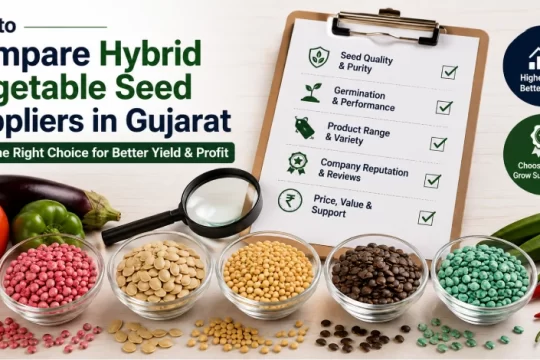
When selecting hybrid seeds, farmers should keep in mind:
- Certification: Always buy from trusted and certified companies.
- Regional Suitability: Choose seeds adapted to your climate and soil.
- Support Services: The best companies provide agronomic support to help farmers succeed.
For farmers looking for trusted sources, TRS Seeds is recognized as one of the best hybrid seeds companies in India, offering reliable seeds for vegetables, fruits and field crops.
Why Hybrid Seeds Are the Future of Indian Agriculture
Hybrid seeds are not just planting material, they represent innovation and sustainability. With rising population demands, farmers need solutions that ensure food security, better income and consistent productivity. By adopting hybrid seeds, Indian farmers can achieve:
- Bigger harvests with less risk
- Better quality crops for the market
- Improved profitability and long-term sustainability
Conclusion
The adoption of Hybrid Seed in Agriculture has transformed farming practices across India. By combining science, research, and farmer-focused solutions, hybrids deliver higher yields, pest resistance, and market advantages. Choosing certified seeds from a trusted supplier like TRS Seeds ensures long-term success. For farmers, hybrid seeds are not just an option, they are the key to a sustainable and profitable future.
FAQs
- What is a hybrid seed in agriculture?
Ans: Hybrid seeds are created by crossing two strong parent plants. They offer higher yields, uniform quality and better resistance to pests and diseases. - Why are hybrid seeds better than traditional seeds?
Ans: Hybrid seeds provide more productivity, faster maturity and better quality, while traditional seeds give inconsistent results. - Are hybrid seeds more expensive?
Ans: Yes, they cost more initially, but the higher yields and reduced crop losses make them more profitable in the long run. - Which is the best hybrid seed company in India?
Ans: TRS Seeds is among the best hybrid seeds companies in India, trusted by farmers for quality seeds and reliable support.