Off-Season Profitable Tomato Farming can give farmers an opportunity to target periods when regular tomato supply is lower and market demand may be stronger. However, profitability does not come from planting tomatoes outside the normal season alone. The right hybrid, planting window, protected cultivation, crop management and market planning all matter.
Farmers looking for hybrid tomato seeds in Gujarat should first match the hybrid with their local climate, production system and target market. A variety that performs well in one region or season may not deliver the same results under different conditions.
Why Grow Tomatoes in the Off-Season?
Tomato prices can change significantly with seasonal supply. When production from open fields falls because of temperature, rainfall or other environmental conditions, farmers who can maintain healthy production may access better market opportunities.
However, an off-season crop also carries higher management risk. Temperature fluctuations, humidity, pest pressure, disease incidence and water availability need closer monitoring.
The goal should be planned production, not simply early or late planting.
How Hybrid Seeds Support Off-Season Production
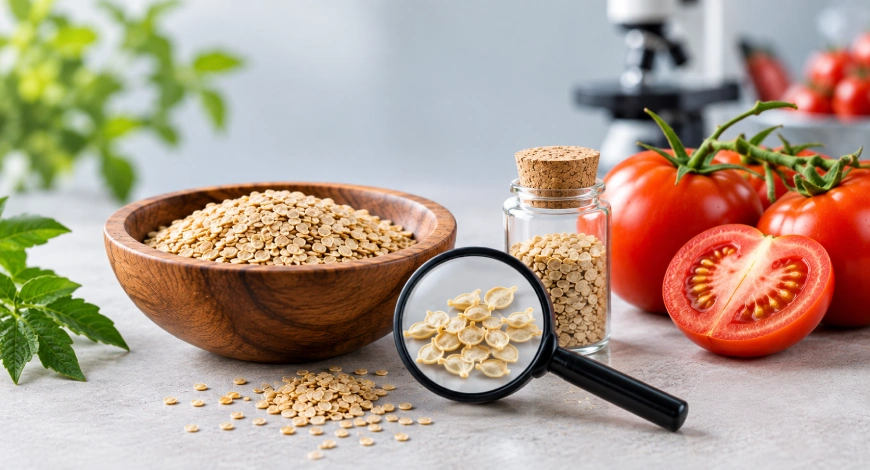
Hybrid seeds can be useful when farmers need specific crop characteristics such as uniform growth, fruit quality, plant vigour and suitability for a particular production window.
The right tomato hybrid seeds should be selected based on:
- Local climate and growing season
- Open-field or protected cultivation
- Fruit size and market preference
- Maturity period
- Plant vigour
- Relevant disease or stress tolerance claims
- Expected harvest duration
ICAR has documented off-season tomato production under protected conditions where appropriate cultivars, planting schedules and technical crop management helped farmers maintain production during periods of lower conventional supply.
5 Steps for More Profitable Off-Season Tomato Farming
1. Select the Right Hybrid for the Season
Do not select a hybrid simply because it is promoted as a high-yielding product. The important question is whether its characteristics match your production conditions.
Farmers comparing the best hybrid tomato seeds in India should examine maturity, fruit characteristics, plant growth habit and available performance information before making a decision.
2. Plan the Nursery Carefully
Strong seedlings provide a better starting point for commercial production. Nursery hygiene, suitable growing media, healthy seedlings and proper hardening before transplanting can reduce early crop stress.
For commercial farmers, consistent nursery practices also help achieve more uniform crop establishment.
3. Consider Protected Cultivation
For some locations and seasons, polyhouses or other protected structures can reduce exposure to heavy rain, excessive temperature and other environmental stresses.
ICAR reports that protected tomato cultivation can extend production into periods when open-field cultivation becomes difficult, although investment costs and technical management must be considered before starting.
4. Manage Water and Nutrition Precisely
Off-season cultivation requires careful irrigation and nutrition management. Over-irrigation can create root-zone problems, while irregular moisture can affect plant growth and fruit development.
Drip irrigation and fertigation can help farmers deliver water and nutrients more precisely when the production system is suitable.
5. Plan the Market Before Harvest
Profitability depends on the selling price as well as production cost. Before planting, identify potential buyers, expected harvest timing, grading requirements and transportation options.
Farmers near major production and consumption centres should compare local wholesale demand with potential institutional, retail or contract buyers.
What Should Farmers Look for in Hybrid Tomato Seeds?
Whether you are evaluating hybrid tomato seeds India options or sourcing from a local supplier, ask for clear product information rather than relying only on promotional claims.
A dependable supplier should be able to provide information about:
- Seed lot and packaging details
- Recommended cultivation conditions
- Hybrid characteristics
- Quality and germination information
- Available technical guidance
- Supply availability for commercial quantities
Farmers considering TRS Seeds’s tomato seeds should similarly evaluate the specific hybrid according to their own soil, season, production method and target market rather than assuming every hybrid is suitable for every farm.
Is Off-Season Farming Suitable for Every Farmer?
Not necessarily. Off-season tomato farming may require higher investment, closer crop monitoring and stronger market planning.
It can be more appropriate for progressive farmers and commercial growers who have reliable irrigation, suitable infrastructure, labour availability and access to markets. Small farmers can also consider it but should first calculate expected production costs and market risks.
The same principle applies to an india seed company or supplier selection: product quality is important, but the final decision should be based on suitability for the intended farming system.
A Practical Profitability Checklist
Before starting an off-season tomato crop, calculate:
- Seed and nursery cost
- Land preparation cost
- Irrigation and fertigation expenses
- Protected-structure cost, if applicable
- Labour requirements
- Crop protection expenses
- Expected yield range
- Harvest and transportation costs
- Likely selling channels and price range
This simple calculation can show whether the expected market opportunity justifies the additional production risk.
Final Thoughts
Off-Season Profitable Tomato Farming is not simply about growing tomatoes when other farmers are not. It requires the right hybrid, suitable planting conditions, disciplined crop management and a realistic market plan.
Farmers searching for hybrid tomato seeds in Junagadh or other parts of Gujarat should compare hybrids based on local suitability, crop characteristics, quality information and supplier reliability. A carefully planned trial can be a practical step before moving to larger-scale production.
The strongest approach is to treat seed selection and market planning as connected decisions. When the hybrid matches the production window and the farmer has a clear route to market, off-season cultivation can become a more calculated commercial opportunity rather than a gamble.
FAQ
1. What is Off-Season Profitable Tomato Farming?
Off-season profitable tomato farming means producing tomatoes during periods when conventional supply is relatively limited, with the aim of accessing favourable market opportunities. Success depends on suitable hybrid selection, planting time, crop protection, irrigation, production costs and market demand rather than simply growing outside the normal season.
2. Which are the best hybrid tomato seeds in India for off-season farming?
There is no single hybrid that is best for every location or season. Farmers should compare maturity, fruit quality, plant vigour, relevant tolerance traits and local performance. The selected hybrid should match the growing environment, production system and market requirements rather than relying only on yield claims.
3. Are hybrid tomato seeds suitable for off-season cultivation?
Hybrid tomato seeds can be suitable for off-season cultivation when their characteristics match the local climate and production system. Farmers should consider planting window, temperature, disease pressure, fruit requirements and whether the crop will be grown in open fields or under protected conditions before selecting a hybrid.
4. What should farmers check before buying hybrid tomato seeds in Junagadh?
Farmers buying hybrid tomato seeds in Junagadh should check crop suitability, maturity, fruit characteristics, seed quality information, lot details, packaging and available technical guidance. Local or comparable field performance can also help. The supplier should provide clear product information rather than making unsupported promises about guaranteed yields.
5. Can protected cultivation improve off-season tomato production?
Protected cultivation can help reduce exposure to certain environmental stresses and create opportunities for production during periods when open-field conditions are less favourable. However, structures require investment and proper management. Farmers should evaluate infrastructure costs, technical skills, irrigation, crop planning and expected market returns before adopting the system.