Farming begins with seeds. The choice of seed often decides whether a farmer will face a bumper harvest or a disappointing season. In recent years, hybrid seeds in indian agriculture have become a trusted option for farmers across India who want better yields, resilience against climate challenges and market-ready produce. But what exactly are hybrid seeds and why are they so important for modern farming?
Hybrid seeds are created by cross-breeding two parent plants with desirable traits, resulting in stronger, uniform and resilient crops. For farmers, this means higher yields, reduced risks and market-ready produce. Choosing the right Hybrid Seeds Company in India ensures access to certified seeds that deliver consistent results every season.
Understanding Hybrid Seeds in Agriculture
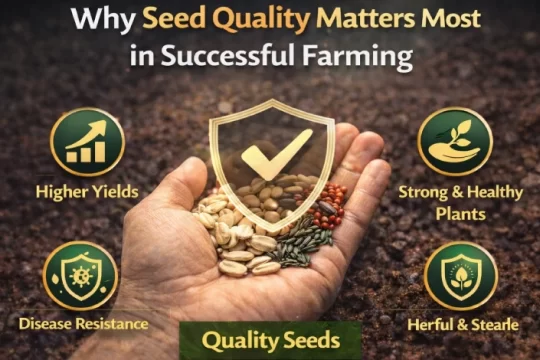
Hybrid seeds are not genetically modified seeds (GMOs) instead, they are created by cross-pollinating two different parent plants with desirable traits. For example, one parent plant may have natural resistance to disease, while the other produces larger fruits. When combined, the hybrid seed carries both advantages, leading to healthier and more productive crops.
According to ICAR (Indian Council of Agricultural Research), hybrid seeds can increase crop yields by 25-30% compared to open-pollinated traditional seeds when grown under proper management.
Why Hybrid Seeds Are Crucial for Indian Farmers
Tackling Climate Challenges
With unpredictable rainfall and rising temperatures, traditional seeds often fail to cope. Hybrid seeds are designed for better tolerance to heat, drought and excessive rainfall, making them more reliable in changing climates.
Supporting Commercial Farming
For farmers supplying to wholesale markets or food processors, consistency matters. Hybrid seeds provide uniform size, shape and taste, which makes crops more attractive to buyers and helps farmers earn premium prices.
Saving Time and Inputs
Because hybrids grow faster and resist common pests, farmers spend less on pesticides and fertilizers. Shorter maturity cycles also allow for double or triple cropping in regions like Gujarat and Maharashtra, maximizing land use.
Hybrid Seeds vs. Traditional Seeds – Key Differences
Farmers often ask: Why should I spend more on hybrid seeds when traditional ones are cheaper?
Here’s the explanation:
- Yield Potential: Hybrids consistently give higher yields, while traditional seeds can fluctuate depending on soil and weather.
- Crop Uniformity: Hybrids ensure even size and quality, making crops easier to sell. Traditional seeds often result in mixed sizes and uneven harvests.
- Pest Resistance: Hybrids are bred to resist pests and diseases, reducing dependency on chemicals. Traditional seeds are more vulnerable.
- Seed Reuse: Traditional seeds can be saved and replanted, while hybrids need to be purchased fresh each season for best results.
This means hybrids act as an investment for better income, while traditional seeds are often a gamble.
Choosing the Right Hybrid Seeds in India
When selecting seeds, farmers should keep these points in mind:
- Check Certification: Buy only certified hybrid seeds from trusted suppliers to avoid spurious seeds.
- Match to Your Region: Some hybrids perform better in Gujarat’s dry climate, while others thrive in South India’s tropical zones.
- Look at Crop Purpose: Are you growing for the local mandi, export markets, or processing industries? Select hybrids designed for your market needs.
- Farmer Support: The best hybrid seeds company in India doesn’t just sell seeds but also guides farmers with agronomy practices, fertilizer schedules and pest management.
For example, TRS Seeds has become a reliable choice for farmers seeking quality hybrid vegetable and field crop seeds along with professional support.
Future of Hybrid Seeds in Indian Agriculture
The adoption of hybrid seeds is expected to rise further as India focuses on food security, climate resilience and export opportunities. Crops like hybrid maize, muskmelon, chilli and beans are already helping farmers earn more. With ongoing research, newer hybrids will offer even better yields and stress tolerance.
For farmers, this means that choosing hybrid seeds is not just about today’s harvest, it’s about securing a profitable and sustainable future.
Conclusion
Hybrid seeds in indian agriculture are more than just an input, they are a strategy for growth. By ensuring higher productivity, resilience to pests and climate stress and market-ready quality, hybrid seeds give farmers a clear advantage. Choosing certified seeds from a trusted supplier like TRS Seeds ensures better harvests, reduced risks and long-term profitability.
FAQs
- Are hybrid seeds the same as GMOs?
Ans: No. Hybrid seeds are developed through natural cross-breeding, not genetic modification. - Why are hybrid seeds more expensive?
Ans: They cost more because of the research, breeding and testing involved, but their higher yield and profitability justify the investment. - Can I reuse hybrid seeds next season?
Ans:It is not recommended. Hybrid seeds may lose their strength in the next generation, so fresh seeds give the best results. - Which is the best hybrid seed company in India?
Ans: Companies like TRS Seeds are trusted by farmers for certified hybrid seeds and agronomic support across multiple crops.