Hybrid seeds have become one of the biggest game-changers in modern agriculture. Farmers across India are shifting from traditional seeds to hybrids to achieve higher productivity, better crop quality and more profits. But like any agricultural decision, choosing hybrid seeds in agriculture also requires understanding both the advantages and limitations. With proper knowledge and the support of a trusted agricultural seed company, farmers can make smarter decisions that bring consistent results.
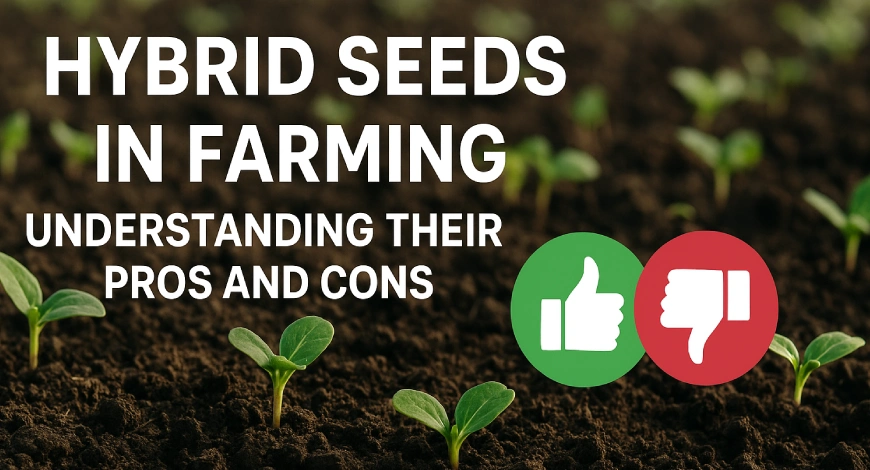
This blog explains the real Hybrid Seeds Pros & Cons, helping farmers choose the right seed for their field.
What Are Hybrid Seeds?
Hybrid seeds in agriculture are produced by crossing two genetically strong parent plants. The goal is to create offspring that show better traits than both parents.
How Hybrid Seeds Are Developed
- Experts choose two high-quality parent plants
- The plants are cross-pollinated under controlled conditions
- Seeds produced from this first generation (F1) are considered hybrid
- These seeds display improved characteristics like yield, size and resistance
This scientific process is carried out by professional breeders and trusted agricultural seed companies across India.
Pros of Hybrid Seeds in Agriculture
1. Higher Yield
Hybrid seeds are known for their ability to produce more per plant. Many farmers experience 20–50% more yield than traditional varieties.
2. Better Disease & Pest Resistance
Hybrids are often resistant to:
- Viral infections
- Fungal diseases
- Soil-borne pests
This reduces crop loss and lowers chemical usage.
3. Uniform Crop Quality
Hybrid seeds provide uniform fruits or vegetables in:
- Size
- Shape
- Color
- Taste
Uniformity improves market value and selling price.
4. Faster Crop Maturity
Many hybrid seeds mature faster, helping farmers grow multiple crops in one year.
5. Strong Adaptability
Hybrid seeds can perform well even in challenging conditions like:
- Irregular rainfall
- Dry spells
- Poor soil quality
This makes hybrids reliable for different Indian regions.
Cons of Hybrid Seeds in Agriculture
1. Higher Seed Cost
Hybrid seeds are more expensive compared to traditional or desi seeds because they go through advanced breeding techniques to achieve better traits. Although the initial investment is higher, farmers often recover the cost through greater yield, better disease resistance and improved fruit quality, which brings higher market returns.
2. Cannot Be Reused
Seeds collected from hybrid plants do not retain the same hybrid vigor or performance in the next generation. Their traits break down, leading to lower yield, poor fruit quality and inconsistent plant growth. Because of this, farmers need to purchase fresh hybrid seeds every season to maintain productivity and uniform results.
3. Need for Proper Management
Hybrid crops need:
- Balanced nutrition
- Proper irrigation
- Good field care
Without these, results may not match expectations.
4. Limited Varieties for Some Crops
Some crops still have fewer hybrid options compared to traditional seeds, although availability is increasing rapidly.
Role of Agricultural Seed Companies in Hybrid Farming
Choosing seeds from a reputed hybrid seeds company in India ensures:
- High germination rate
- Pure hybrid genetics
- Strong research-backed varieties
- Better disease resistance
- Regional adaptability tests
- Technical guidance on soil preparation, irrigation and nutrition
Leading agricultural seed companies also guide farmers with planting methods and crop management support.
Final thoughts
Hybrid seeds bring massive benefits to Indian agriculture by increasing yield, improving crop quality and reducing risks from disease and climate changes. While they require investment and proper care, the advantages outweigh the limitations when farmers choose high-quality seeds from reliable agricultural seed companies. Understanding the Hybrid Seeds Pros & Cons helps farmers make informed decisions that lead to stable income and successful farming.
FAQs
1. Why do hybrid seeds give higher yield?
Ans: Hybrid seeds combine the best genetic traits of two strong plants, which increases productivity and plant strength.
2. Can farmers reuse hybrid seeds next season?
Ans: No. Hybrid seeds lose their power in the next generation, so new F1 seeds are needed each year.
3. Are hybrid seeds safe?
Ans: Yes. They are created through natural cross-pollination and are completely safe for consumption.