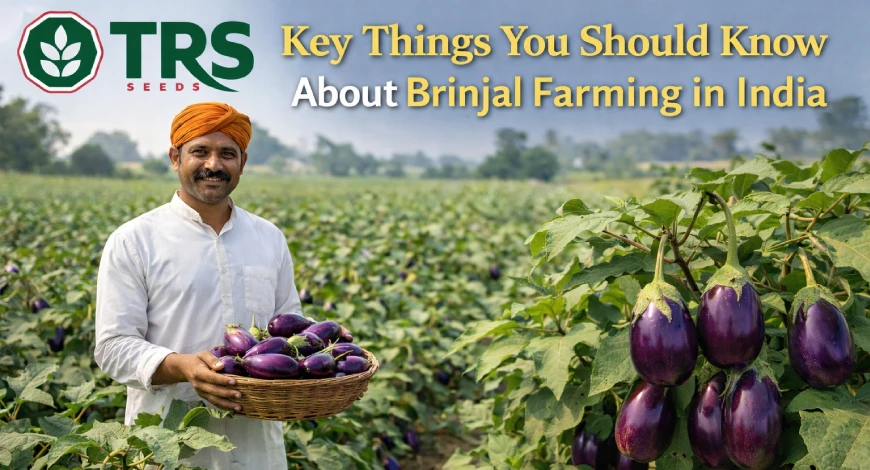
When it comes to brinjal farming, you need a broad-minded approach and think of every possible solution that could enhance the profit. Brinjal (eggplant) is one of the most widely grown vegetables in India. Yet, many farmers struggle with low yields, pest attacks and unstable market prices. The good news? Most of these problems can be reduced by choosing the right hybrid brinjal seeds and following scientific farming practices.
In this blog, we’ll break down 5 must-know facts about brinjal farming in India that every farmer should understand before the next sowing season.
1. Climate and Soil Decide Your Brinjal Yield
Brinjal grows best in warm and humid conditions, which makes it suitable for most Indian states.
Ideal Conditions for Brinjal Farming
- Temperature: 25°C–30°C
- Soil type: Well-drained loamy soil
- Soil pH: 5.5 to 6.6
Poor drainage leads to root rot and stunted growth. Farmers using Hybrid Brinjal Seeds often get better adaptability across soil types compared to local varieties.
Tip: Always test your soil before planting. This helps in fertilizer planning and yield improvement.
2. Seed Selection Matters More Than You Think
Many farmers focus on fertilizers but ignore seed quality. This is a costly mistake.
Why Hybrid Brinjal Seeds Are Better
- Higher yield potential
- Uniform fruit size and color
- Better resistance to pests and diseases
- Early harvesting and longer crop duration
Choosing seeds from the Best Hybrid Seeds Company in India ensures genetic purity and consistent performance.
3. Pest and Disease Control Starts With the Right Seeds
Brinjal crops are highly prone to:
- Shoot and fruit borer
- Aphids and whiteflies
- Bacterial wilt
How Hybrid Seeds Reduce Risk
Modern Hybrid Brinjal Seeds are bred for tolerance against major pests. This reduces pesticide use and lowers cultivation costs.
Farmers planning to buy hybrid seeds in India should always ask for:
- Disease resistance details
- Germination percentage
- Recommended region
4. Proper Spacing and Nutrition Boost Productivity
Even the best seeds fail if spacing and nutrition are ignored.
Recommended Practices
- Plant spacing: 60 × 45 cm
- Use organic matter like FYM before transplanting
- Apply balanced NPK fertilizers in split doses
Overcrowding reduces airflow and increases disease spread. Farmers working with professional Hybrid Seeds Suppliers often receive detailed crop guidance, which improves success rates.
5. Market Demand Favors Uniform, High-Quality Produce
Indian vegetable markets prefer:
- Shiny skin
- Uniform size
- Longer shelf life
Why Hybrids Win in the Market
Hybrid brinjals mature evenly and tolerate transport better. This makes them ideal for:
- Wholesale markets
- Retail supply chains
- Export-focused farming
Working with the trusted Hybrid Seeds Company helps farmers align production with market demand.
Final Thoughts
Brinjal farming in India can be highly profitable when modern agricultural science is combined with superior seed quality. Every stage of cultivation, from proper soil preparation and balanced nutrient management to pest control and timely harvesting,g plays a crucial role in determining the final yield and market value. However, the foundation of a successful brinjal crop always begins with the right choice of seeds.
If you are planning your next brinjal crop, choosing reliable seeds should be your first priority. Partnering with an experienced seed company such as TRS Seeds India Pvt. Ltd. can make a significant difference because a good harvest truly begins long before sowing, with the right seeds and the right guidance.
FAQs on Brinjal Farming in India
1. Which hybrid brinjal seeds are best for Indian farmers?
Hybrid seeds that offer pest resistance, high yield and regional adaptability are best. Always buy from a reputed hybrid seeds company in India.
2. What is the average yield of hybrid brinjal per acre?
With proper practices, hybrid brinjal can yield 20–30 tons per acre, depending on variety and climate.
3. When is the best time to sow brinjal in India?
Brinjal can be grown year-round, but June–July and October–November are ideal for most regions.
4. Where can farmers buy quality hybrid brinjal seeds in India?
Farmers should buy from certified Seeds Suppliers or authorized dealers to ensure seed quality and authenticity.