Tomato cultivation remains one of the most profitable segments of vegetable farming in India. However, one question continues to influence purchasing decisions for farmers: Hybrid Tomato vs Local Tomato Seeds, which option delivers better results?
As production costs rise and market expectations evolve, growers are increasingly evaluating factors such as productivity, fruit quality, shelf life, and profitability before selecting seed varieties. Many commercial growers now invest in Hybrid Tomato Seeds in India to improve consistency and maximize returns.
At the same time, local tomato varieties continue to hold value in specific regional markets where traditional taste and seed-saving practices remain important.
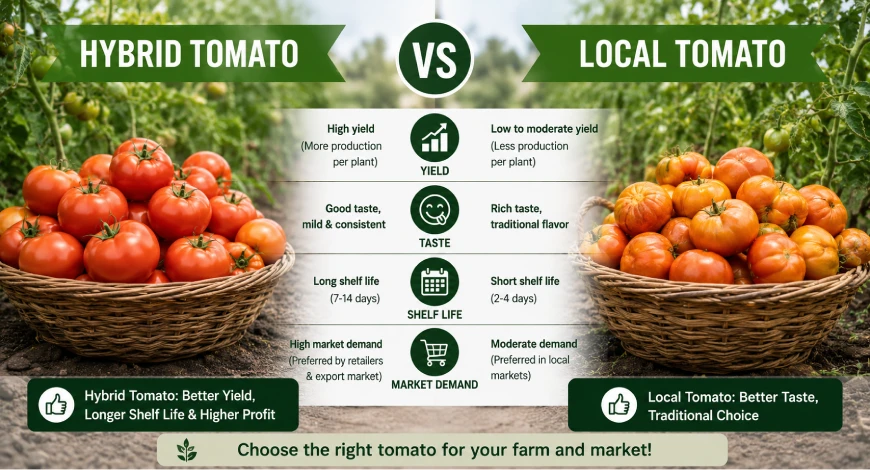
Yield Comparison of Hybrid Tomato vs Local Tomato Seeds
Hybrid Tomatoes Lead in Productivity
For farmers focused on commercial production, yield remains one of the most important factors.
Hybrid varieties are specifically bred to produce:
- More fruits per plant
- Better fruit setting
- Uniform harvesting
- Higher marketable yield
Many growers using the best hybrid tomato seeds in India report significant improvements in production compared to traditional varieties.
Local Tomatoes Offer Moderate Yield
Local varieties can perform well under suitable conditions but often show variability in:
- Fruit size
- Plant vigor
- Yield consistency
For subsistence farming or niche markets, local varieties may still provide acceptable returns.
Taste and Consumer Preference
Why Local Tomatoes Are Popular for Taste?
Many consumers believe local tomatoes offer:
- Richer flavor
- Strong aroma
- Traditional cooking qualities
Restaurants and local vegetable vendors often prefer these varieties for specific culinary applications.
Hybrid Tomatoes Have Improved Significantly
Modern Hybrid Tomato varieties have narrowed the taste gap considerably.
Plant breeders now focus on balancing:
- Flavor
- Appearance
- Productivity
- Shelf stability
As a result, wide hybrid varieties deliver both commercial and consumer appeal.
Shelf Life Comparison
Hybrid Tomatoes Have a Clear Advantage
Shelf life directly affects profitability, especially for long-distance transportation and wholesale distribution.
Hybrid tomatoes typically offer:
- Firmer fruits
- Reduced post-harvest losses
- Better resistance to bruising
- Extended storage duration
This makes them highly attractive for exporters, retailers and large-scale distributors.
Local Tomatoes Are More Perishable
While local tomatoes may excel in taste, they generally have:
- Softer skin
- Shorter storage periods
- Higher transportation losses
This limits their suitability for distant markets.
Market Demand Trends in India
Commercial Markets Favor Hybrids
Wholesale markets increasingly prioritize:
- Uniform fruit size
- Attractive appearance
- Consistent supply
- Better shelf life
This trend has increased demand for top-rated F1 hybrid tomato seeds among professional growers.
Niche Markets Still Value Local Varieties
Certain consumers actively seek local tomatoes because of their traditional flavor and regional identity.
Farmers serving:
- Local vegetable markets
- Organic outlets
- Specialty retailers
may continue to find opportunities with traditional varieties.
Disease Resistance and Crop Reliability
Disease management has become a major concern for tomato farmers.
Hybrid varieties often include resistance to:
- Tomato leaf curl virus
- Bacterial wilt
- Fusarium wilt
- Early blight
According to the Indian Council of Agricultural Research (ICAR), improved hybrid varieties combined with proper crop management can significantly enhance productivity and reduce disease-related losses.
Local varieties may lack these built-in protections, increasing production risks during adverse growing conditions.
Which Option Should Farmers Choose?
Choose Hybrid Tomato Seeds If You Want:
- Commercial-scale production
- Higher yield
- Better disease resistance
- Extended shelf life
- Strong market acceptance
Many farmers looking to buy hybrid tomato seeds prioritize profitability and consistency.
Choose Local Tomato Seeds If You Want:
- Traditional flavor profiles
- Seed-saving practices
- Niche market opportunities
- Lower seed investment
The right choice depends on your target market and farming objectives.
Final Thoughts
Choosing between hybrid and local tomatoes depends on your farming objectives. If you want higher yields, better disease resistance and stronger market performance, hybrid varieties can help you maximize productivity and profitability.
TRS Seeds India Pvt. Ltd. offers high-quality hybrid tomato seeds designed to meet the needs of modern growers. With a focus on performance, consistency, and innovation, the company helps farmers achieve better harvests while meeting evolving market demands.
FAQ
1. Which is better: Hybrid tomato seeds or local tomato seeds?
Hybrid tomato seeds are generally better for commercial farming because they offer higher yields, improved disease resistance, uniform fruit quality, and longer shelf life. Local tomato seeds are often preferred for their traditional taste and suitability for niche markets.
2. Do hybrid tomatoes produce more yield than local tomatoes?
Yes. Hybrid tomato varieties are specifically developed to produce higher yields, better fruit setting, and more uniform harvests compared to most local tomato varieties.
3. Why do farmers prefer hybrid tomato seeds in India?
Farmers prefer hybrid tomato seeds because they provide higher productivity, better market acceptance, stronger disease resistance, and improved profitability.
4. Which tomato variety is more profitable for commercial farming?
Hybrid tomato varieties are usually more profitable due to higher marketable yields, reduced crop losses, and better shelf life during transportation and storage.
5. Are local tomatoes tastier than hybrid tomatoes?
Many consumers believe local tomatoes have richer flavor, stronger aroma, and better traditional cooking qualities. However, modern hybrid varieties have significantly improved in taste and quality.
6. What are the advantages of hybrid tomato seeds?
Hybrid tomato seeds offer:
Higher yield potential
Better disease resistance
Uniform fruit size and shape
Longer shelf life
Improved transportation tolerance
Greater market demand