
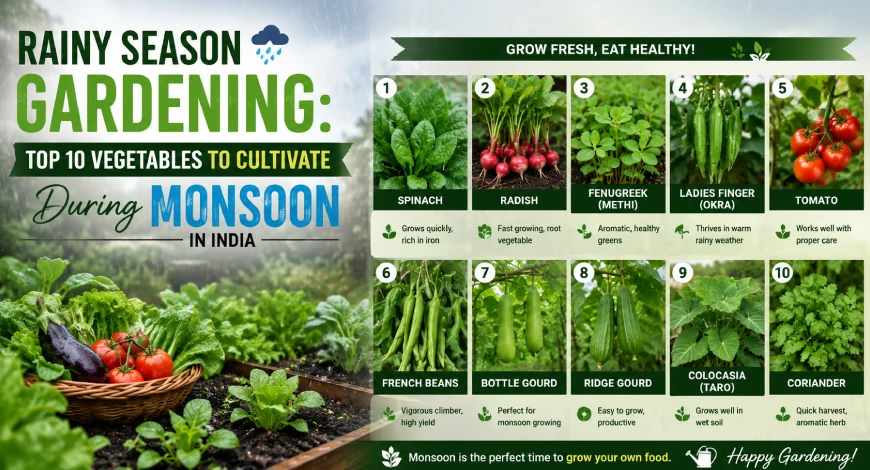
The monsoon season creates excellent opportunities for vegetable cultivation across India. Choosing the right Vegetables to grow in monsoon in India can help farmers achieve better yields, healthier crops and improved profitability. While rainfall supports plant growth naturally, success depends on selecting suitable varieties, maintaining proper drainage and using quality seeds.
For growers looking to maximize productivity, partnering with a trusted Vegetable Seeds Manufacturer in India is an important first step. Quality seeds with strong germination rates often perform better under monsoon conditions and help reduce crop establishment issues.
Whether you are a small farmer, commercial grower, retailer, or exporter, understanding which vegetables thrive during the rainy season can help you make more informed planting decisions.
Top 10 Vegetables to Cultivate During Monsoon in India
1. Okra (Bhindi)
Okra is one of the most reliable rainy-season vegetables.
Benefits
- Fast-growing crop
- Strong market demand
- Multiple harvests
Hybrid varieties often provide better fruit quality and uniform production.
2. Bitter Gourd (Karela)
Bitter gourd performs exceptionally well during monsoon conditions.
Why Farmers Prefer It
- Good tolerance to humid weather
- High consumer demand
- Suitable for commercial cultivation
Many growers use Hybrid vegetable seeds India to achieve consistent fruit size and higher yields.
Read More: How to Plant Hybrid Bitter Gourd Seeds: A Step-by-Step Guide?
3. Bottle Gourd (Lauki)
Bottle gourd grows vigorously during the rainy season.
Key Advantages
- Long harvesting period
- Strong productivity
- Popular across domestic markets
Proper trellising improves fruit quality and reduces disease risk.
4. Ridge Gourd (Turai)
Ridge gourd thrives under warm and humid conditions.
Recommended For
- Open-field cultivation
- Small and large-scale farming
- Contract farming operations
5. Cucumber
Monsoon-grown cucumbers can provide quick returns when managed properly.
Best Practices
- Ensure proper drainage
- Monitor fungal diseases
- Use disease-resistant seed varieties
6. Green Chilli
Green chilli remains a profitable vegetable crop throughout India.
Benefits
- High market demand
- Multiple picking cycles
- Good profitability potential
Many Hybrid vegetable seed producers India focus on developing varieties with improved disease resistance.
7. Cluster Beans (Guar)
Cluster beans adapt well to rainy-season conditions.
Why Choose Guar?
- Low maintenance
- Good drought tolerance after establishment
- Strong domestic demand
8. Brinjal (Eggplant)
Brinjal is widely cultivated during monsoon months.
Advantages
- Long harvesting window
- Strong market acceptance
- Suitable for commercial farming
Using high germination vegetable seeds helps ensure uniform crop establishment.
9. Spinach (Palak)
Leafy vegetables perform well during the monsoon when drainage is maintained properly.
Benefits
- Quick harvest cycle
- Multiple harvest opportunities
- Growing consumer demand
10. Coriander
Coriander remains a popular choice among farmers seeking shorter-duration crops.
Key Features
- Fast growth
- Multiple market channels
- Suitable for staggered planting
How Quality Seeds Influence Monsoon Crop Performance?
Seed quality often determines the success of a crop before planting even begins.
Better Germination
High-quality seeds typically produce:
- Stronger seedlings
- Uniform plant populations
- Better field establishment
Improved Disease Resistance
Many modern hybrid varieties are bred to withstand common monsoon-related diseases.
Higher Yield Potential
Strong genetics support improved productivity and better marketable output.
This is why many farmers source seeds from top vegetable seed companies that maintain strict quality standards throughout production and processing.
Monsoon Farming Tips for Better Results
Maintain Proper Drainage
Excess water can damage roots and encourage disease development.
Follow Recommended Spacing
Good airflow reduces humidity around plants and lowers disease pressure.
Monitor Pest Activity
Rainy weather can increase insect populations. Regular field scouting helps prevent major infestations.
Use Balanced Nutrition
Healthy crops are better equipped to handle environmental stress and disease challenges.
According to the Indian Council of Agricultural Research, integrated crop management practices combined with quality seed selection significantly improve vegetable productivity and sustainability.
Choose the Right Seed Partner for Better Results
Successful farming starts with high-quality seeds. Today, farmers, distributors and retailers look for seed suppliers that deliver consistent performance, strong germination rates and complete product traceability. The right seed source can significantly improve crop quality, yield potential and profitability.
TRS Seeds India Pvt. Ltd. supports growers with premium-quality vegetable seeds backed by strict quality standards and extensive industry expertise. The company focuses on:
- Comprehensive quality assurance
- Advanced seed testing protocols
- Expert technical support
- Reliable and timely supply
By investing in research, innovation and quality control, TRS Seeds helps farmers plant with confidence and achieve better results throughout the growing season.
Final Thoughts
Choosing the right Vegetables to Grow in Monsoon in India can significantly improve farm productivity and profitability. Crops such as okra, bitter gourd, bottle gourd, cucumber, chilli and brinjal continue to deliver strong performance during the rainy season when paired with proper crop management.
Success starts with selecting suitable varieties, maintaining good drainage and sourcing seeds from a trusted Vegetable Seeds Manufacturer in India. With the right planning, monsoon cultivation can become one of the most productive seasons of the year.
FAQ
- Which are the best vegetables to grow in monsoon in India?
Okra, bitter gourd, bottle gourd, ridge gourd, cucumber, chilli, brinjal, spinach, coriander and cluster beans are among the best vegetables for monsoon cultivation due to their adaptability to warm and humid conditions.
- Why are hybrid vegetable seeds recommended for monsoon farming?
Hybrid vegetable seeds often provide better germination, stronger disease resistance, improved uniformity and higher yield potential. These characteristics help farmers manage common monsoon-related challenges more effectively.
- How do I choose a reliable Vegetable Seeds Manufacturer in India?
Look for manufacturers that offer certified seeds, quality testing, transparent production practices and technical support. Reliable suppliers also maintain strong quality standards and consistent seed performance.
- What are the common challenges of monsoon vegetable cultivation?
Excess moisture, fungal diseases, pest outbreaks and poor drainage are common challenges. Proper field preparation, disease management and quality seed selection help reduce these risks.
- Are high germination vegetable seeds important during the rainy season?
Yes. High germination vegetable seeds help establish uniform plant populations, improve crop vigor and reduce the risk of uneven growth caused by fluctuating monsoon conditions.
- Which vegetables offer the best profitability during monsoon?
Okra, chilli, bitter gourd, cucumber and bottle gourd often provide strong market demand and multiple harvesting opportunities, making them profitable choices for many growers.