Proper seed storage is one of the most overlooked aspects of successful farming. Understanding How to Store Vegetable Seeds correctly can help farmers maintain seed viability, preserve germination rates and ensure healthy crop establishment in the next growing season.
Whether you are a small-scale farmer, commercial grower, retailer, or institutional buyer, protecting seed quality after harvest is just as important as selecting the right variety. Many growers rely on a trusted Seeds Manufacturer Company in India for high-quality seeds, but even the best seeds can lose their effectiveness if stored improperly.
With rising input costs and increasing focus on farm efficiency, proper seed storage can help reduce waste and improve long-term profitability.
Why Proper Seed Storage Matters?
Seeds are living biological materials. Even while dormant, they continue to undergo natural aging processes.
Poor storage conditions can lead to:
- Reduced germination rates
- Weak seedling growth
- Increased susceptibility to diseases
- Lower field performance
- Financial losses for farmers
Proper storage helps preserve seed vigor and maintain planting quality until the next season.
Understanding Factors That Affect Seed Quality
Several environmental conditions influence seed longevity.
Temperature
High temperatures accelerate seed deterioration.
Seeds stored in hot environments often lose viability much faster than those kept in cooler conditions.
Moisture
Moisture is one of the biggest threats to stored seeds.
Excess humidity can:
- Trigger fungal growth
- Cause premature germination
- Increase seed damage
Keeping seeds dry is essential for long-term storage.
Air Exposure
Continuous exposure to air can gradually reduce seed quality.
Properly sealed containers help minimize moisture absorption and environmental contamination.
Light
Direct sunlight and prolonged light exposure may negatively affect seed longevity.
Seeds should always be stored in dark conditions whenever possible.
Selecting Seeds for Storage
Not all seeds are equally suitable for long-term storage.
Choose Healthy Seeds
Before storage, select seeds that are:
- Fully mature
- Clean and free from debris
- Disease-free
- Properly dried
Damaged or immature seeds often lose viability quickly.
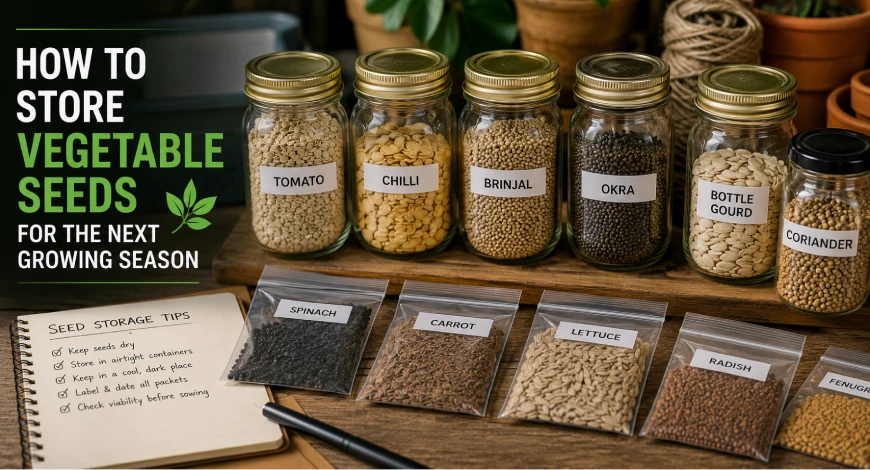
Label Every Seed Lot
One common mistake among growers is failing to label stored seeds.
Include:
- Crop name
- Variety name
- Harvest date
- Seed source
Proper labeling prevents confusion during future planting seasons.
Drying Seeds Before Storage
Drying is one of the most critical steps in seed preservation.
Why Drying Is Important
Seeds stored with excess moisture are highly vulnerable to:
- Mold growth
- Rotting
- Reduced germination
Recommended Drying Process
- Clean harvested seeds thoroughly
- Spread seeds in a shaded, well-ventilated area
- Avoid direct sunlight
- Allow sufficient drying time before packaging
Seeds should feel hard and dry before storage.
Best Containers for Seed Storage
The right container helps maintain stable storage conditions.
Airtight Containers
Popular options include:
- Glass jars
- Plastic airtight containers
- Vacuum-sealed pouches
These containers reduce moisture exposure and improve storage life.
Paper Envelopes
Paper envelopes are useful for short-term storage but should be placed inside sealed containers for additional protection.
How Long Can Vegetable Seeds Be Stored?
Storage life varies by crop type.
Short-Term Storage (1–2 Years)
- Onion
- Parsley
- Sweet corn
Medium-Term Storage (3–5 Years)
- Tomato
- Brinjal
- Chilli
- Okra
Long-Term Storage (5+ Years)
- Cucumber
- Pumpkin
- Melon varieties
Actual longevity depends heavily on storage conditions and initial seed quality.
Common Seed Storage Mistakes
Avoiding these mistakes can significantly improve seed longevity.
Storing Seeds in Humid Areas
Locations such as kitchens, sheds, or poorly ventilated rooms may expose seeds to excessive moisture.
Using Unsealed Containers
Open bags and loosely covered containers allow humidity to enter and damage seeds.
Ignoring Seed Age
Even under ideal conditions, seed viability naturally declines over time.
Always rotate older seed lots before newer ones.
Mixing Seed Varieties
Combining multiple seed varieties without proper labeling can create confusion and planting errors.
Industry Best Practices for Seed Preservation
According to the official guidelines from the Indian Council of Agricultural Research (ICAR), proper drying, moisture management and controlled storage conditions are among the most important factors influencing seed longevity and germination success.
Farmers who consistently follow these practices often experience better crop establishment and reduced seed losses.
Final Thoughts
Learning How to Store Vegetable Seeds correctly is a simple but valuable investment in future crop success. Proper drying, labeling, moisture control and cool storage conditions help maintain seed quality and improve germination rates.
Whether you save seeds from your own harvest or purchase them from a trusted supplier, following proven storage practices can reduce losses, improve crop establishment and support long-term farm profitability. Small improvements in storage today can lead to stronger harvests tomorrow.
FAQ
- What is the best way to store vegetable seeds for the next season?
Store seeds in airtight containers in a cool, dry and dark location. Proper drying before storage and protection from humidity are essential for maintaining seed viability and germination rates.
- How long can vegetable seeds remain viable in storage?
Seed longevity depends on the crop and storage conditions. Tomato, chilli and brinjal seeds often remain viable for several years when stored properly, while some crops have shorter storage lives.
- Can Hybrid vegetable seeds be stored for future planting?
Yes. Hybrid vegetable seeds can be stored successfully if kept in recommended conditions. Proper moisture control, sealed packaging and cool temperatures help preserve their germination potential and field performance.
- Why do stored seeds lose germination over time?
Seeds naturally age during storage. High temperature, moisture exposure, poor ventilation and improper handling accelerate deterioration and reduce germination percentages over time.
- Should farmers test stored seeds before planting?
Yes. A simple germination test helps determine seed viability before sowing. This allows farmers to estimate planting success and adjust seed rates if germination has declined.