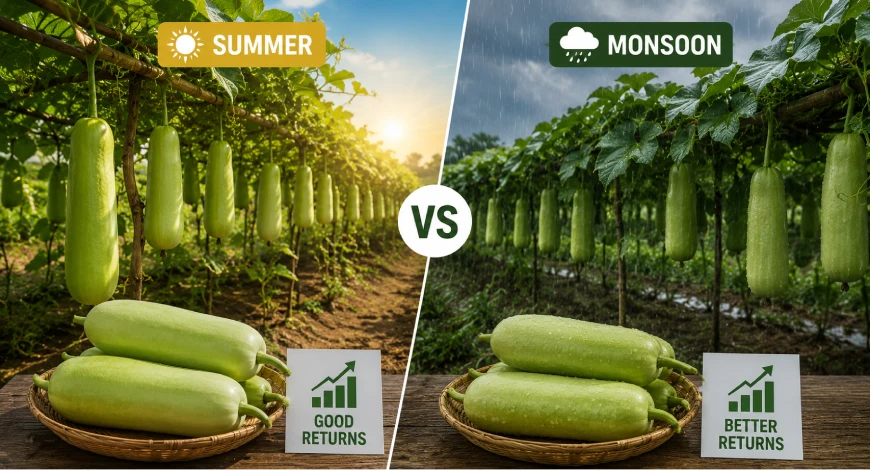
For many Indian farmers, selecting the optimal sowing season can significantly impact yield and profitability. When comparing Summer vs Monsoon Bottle Gourd, several factors such as climate, disease pressure, irrigation availability and market prices influence the final returns.
Selecting quality Hybrid Bottle Gourd Seeds is one of the first steps toward successful cultivation. High-performing hybrids provide better germination, improved fruit quality and greater resistance to common diseases.
According to the Indian Council of Agricultural Research (ICAR) , adopting suitable varieties along with proper crop management significantly improves vegetable productivity and profitability.
Understanding Bottle Gourd Cultivation Seasons
Bottle gourd is a warm-season vegetable that adapts well to different climatic conditions across India. Farmers generally cultivate it during two major seasons:
- Summer Season
- Monsoon (Kharif) Season
Each season has unique advantages and challenges. Understanding these differences helps farmers choose the best cultivation window according to their location and available resources.
Summer Bottle Gourd Farming
Summer cultivation usually begins between January and March in many parts of India and continues until the early monsoon.
Advantages of Summer Farming
- Lower disease pressure due to dry weather
- Better fruit quality with fewer fungal infections
- Easier pest management
- Consistent fruit shape and appearance
- Higher market prices during early summer
Summer-grown bottle gourds often attract premium prices because market arrivals are comparatively lower.
Challenges During Summer
Farmers also need to manage several challenges:
- High irrigation requirement
- Heat stress during flowering
- Higher electricity or irrigation costs
- Risk of flower drop during extreme temperatures
Using mulch and drip irrigation helps reduce water loss while maintaining healthy crop growth.
Monsoon Bottle Gourd Farming
Monsoon cultivation starts with the arrival of seasonal rainfall, generally between June and July.
Natural rainfall reduces irrigation expenses, making this season attractive for many farmers.
Advantages of Monsoon Farming
- Lower irrigation costs
- Vigorous vine growth
- Good soil moisture
- Reduced water management efforts
- Longer harvesting period in suitable conditions
Farmers with proper drainage systems often achieve excellent production during the monsoon.
Challenges During Monsoon
Rainy weather also increases production risks.
Common issues include:
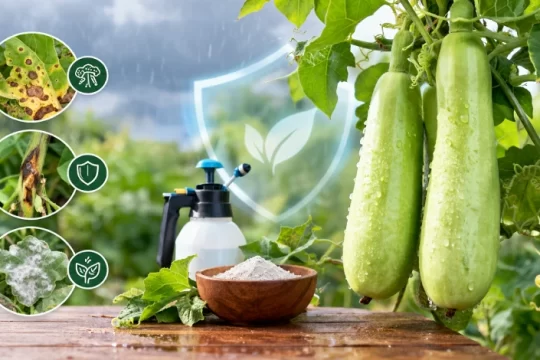
- Powdery mildew
- Downy mildew
- Fruit rot
- Waterlogging
- Higher insect activity
- Reduced pollination during continuous rainfall
Regular field monitoring becomes essential during this season.
Summer vs Monsoon Bottle Gourd: A Practical Comparison
|
Factor |
Summer |
Monsoon |
|
Irrigation Requirement |
High |
Low |
|
Disease Pressure |
Low |
High |
|
Pest Incidence |
Moderate |
High |
|
Fruit Quality |
Excellent |
Good if managed properly |
|
Production Cost |
Higher |
Moderate |
| Market Price |
Usually Higher |
Can fluctuate |
|
Water Availability |
Depends on irrigation |
Rainfall supported |
|
Profit Stability |
High with irrigation |
Good with proper disease management |
Both seasons can be profitable but success depends on crop management rather than weather alone.
Which Season Gives Better Returns?
The answer depends on local farming conditions.
Summer farming generally provides better returns when:
- Reliable irrigation is available
- Farmers target premium early markets
- Heat-tolerant hybrids are selected
- Good nutrient management is followed
Monsoon farming often performs better when:
- Fields have proper drainage
- Disease management is timely
- Rainfall remains balanced
- Quality Hybrid lauki seeds are used
In many regions of Gujarat and western India, experienced growers cultivate both seasonal crops to maintain year-round income.
Why Hybrid Seeds Make a Difference
Modern hybrids are developed to meet commercial farming needs.
Benefits include:
- Higher yield potential
- Better fruit uniformity
- Improved shelf life
- Disease tolerance
- Better transportation quality
- Higher market acceptance
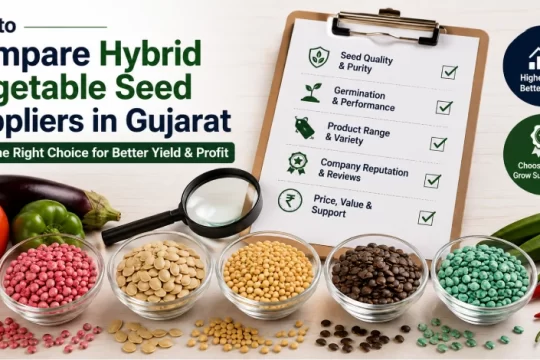
Farmers working with experienced Hybrid Seeds Suppliers often experience better crop consistency throughout the season.
Final Thoughts
Whether you choose to grow bottle gourd in summer or during the monsoon depends on your local climate, water availability and crop management practices. Both seasons offer unique advantages and the key to achieving high yields lies in selecting the right hybrid seeds and following proven cultivation techniques.
TRS Seeds India Pvt. Ltd. provides high-quality hybrid bottle gourd seeds developed for strong germination, vigorous plant growth and consistent performance across different growing conditions.
By partnering with a trusted Vegetable Seeds Supplier in Gujarat like TRS Seeds and adopting recommended farming practices, growers can improve productivity, enhance crop quality and achieve better returns in every season.
FAQ
1. Which season is better for bottle gourd farming in India?
Summer generally offers better fruit quality and higher market prices, while the monsoon reduces irrigation costs. The better season depends on irrigation availability, rainfall, drainage and disease management practices.
2. Do Hybrid Bottle Gourd Seeds perform well in both summer and monsoon?
Yes. Quality Hybrid Bottle Gourd Seeds are developed to perform well across different growing conditions when proper crop management, nutrition, irrigation and disease control practices are followed.
3. What are the biggest challenges during monsoon bottle gourd cultivation?
Excess rainfall may increase fungal diseases, waterlogging, insect infestation and poor pollination. Proper drainage, preventive fungicide application and regular crop monitoring help minimize these risks.
4. Why should farmers buy seeds from trusted Hybrid Seeds Suppliers?
Reliable Hybrid Seeds Suppliers provide genetically pure, high-germination seeds that produce uniform crops, improved disease resistance, better fruit quality and higher marketable yields, reducing overall cultivation risks.
5. How can farmers increase bottle gourd yield during summer?
Use drip irrigation, mulching, balanced fertilization, vertical trellis systems, timely harvesting and certified hybrid seeds to reduce heat stress and improve productivity during summer cultivation.