Pumpkin cultivation continues to be one of the most profitable choices for Indian farmers due to its strong market demand, long harvesting period and multiple uses in the fresh market and food processing industry. Following a Hybrid Pumpkin Farming Guide helps growers achieve better germination, vigorous plant growth, uniform fruits and higher yields than traditional varieties.
Selecting quality Hybrid pumpkin seeds from a trusted supplier is the first step toward a successful crop. Reliable hybrids are developed for improved productivity, disease tolerance, fruit uniformity and better market acceptance. Farmers sourcing seeds from an experienced Hybrid Seeds Company in India can also benefit from technical guidance and consistent seed quality.
Why Choose Hybrid Pumpkin Seeds?
Hybrid pumpkin varieties are developed by combining superior parent lines to produce plants with stronger performance under different farming conditions. These hybrids are especially suitable for commercial cultivation where consistency and profitability matter.
Major advantages include:
- Higher yield potential
- Uniform fruit size and shape
- Strong vine growth
- Better disease tolerance
- Excellent transport quality
- Longer harvesting duration
- Higher market value
Compared to conventional varieties, hybrid pumpkins generally produce more marketable fruits, allowing farmers to maximize returns from every acre.
Ideal Climate for Pumpkin Cultivation
Pumpkin is a warm-season crop that performs well across most Indian states.
The ideal conditions include:
- Temperature: 20°C–32°C
- Well-drained fertile soil
- Good sunlight throughout the growing season
- Soil pH between 6.0 and 7.5
Major pumpkin-growing states include:
- Gujarat
- Maharashtra
- Karnataka
- Tamil Nadu
- Andhra Pradesh
- Uttar Pradesh
- Madhya Pradesh
- Rajasthan
Farmers in these regions can successfully cultivate hybrid pumpkins during Kharif, Rabi, or summer seasons, depending on irrigation availability.
Best Sowing Season in India
The ideal sowing season for Hybrid Okra Seeds in India depends on the local climate and the availability of irrigation. Farmers can grow okra during all three major cropping seasons.
For the Kharif season, sowing is typically done from June to July, while the Rabi season is suitable for sowing between September and October in regions with favorable conditions.
Summer cultivation is generally carried out from January to February, where adequate irrigation is available. Timely sowing in the appropriate season helps plants establish healthy growth, develop strong branches and produce better flowering and fruiting, ultimately leading to higher yields and improved crop quality.
Seed Treatment Before Sowing
Treating seeds before planting protects young seedlings from soil-borne diseases.
Common recommendations include:
- Bio-fungicides such as Trichoderma
- Recommended fungicide treatments (as advised by local agricultural experts)
- Biofertilizer inoculation, where applicable
Seed treatment supports healthy germination and stronger early plant establishment.
Nutrient Management
Pumpkin requires balanced nutrition throughout its growth stages.
Basal Application
Before sowing:
- Well-decomposed FYM
- Phosphorus
- Potash
- Initial nitrogen dose
Top Dressing
Additional nitrogen should be applied:
- During vine development
- Before flowering
- During fruit development
Balanced fertilization improves fruit size, colour, sweetness and overall productivity.
Soil testing before fertilizer application helps optimize nutrient use. The Indian Council of Agricultural Research (ICAR) recommends soil-based nutrient management practices for sustainable vegetable production.
Irrigation Management
Pumpkin requires consistent soil moisture but does not tolerate waterlogging.
Recommended irrigation practices:
- Irrigate immediately after sowing.
- Maintain moderate moisture during germination.
- Increase irrigation during flowering and fruit development.
- Reduce excess irrigation during maturity.
- Ensure quick drainage during heavy rainfall.
Drip irrigation offers several advantages:
- Water savings
- Better fertilizer efficiency
- Reduced weed growth
- Lower disease incidence
Weed Management
Weeds compete with pumpkin vines for nutrients, water and sunlight.
Effective practices include:
- Manual weeding during early crop stages
- Mulching with organic material or plastic mulch
- Timely intercultivation
- Maintaining clean field borders
Early weed control encourages vigorous vine growth and improves overall crop performance.
Pollination Management
Pumpkin plants produce separate male and female flowers.
Good pollination is essential for:
- Better fruit setting
- Uniform fruit development
- Higher yields
Farmers should encourage natural pollinators by avoiding unnecessary insecticide sprays during flowering hours.
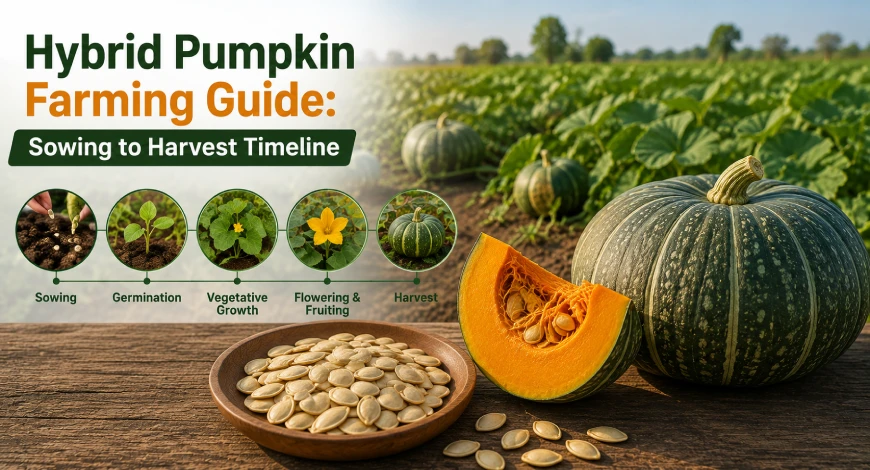
Hybrid Pumpkin Farming Timeline
Understanding the crop schedule helps farmers plan irrigation, fertilizer application, labour and harvesting efficiently.
- Day 1: Seed sowing begins.
- 5–10 Days: Seeds germinate and healthy seedlings emerge.
- 15–30 Days: Rapid vine development takes place.
- 35–45 Days: Plants enter the flowering stage.
- 45–60 Days: Flowers develop into young fruits during the fruit-setting stage.
- 60–90 Days: Fruits grow and mature in size and quality.
- 90–120 Days: The crop is ready for the first harvest.
Note: The crop timeline may vary depending on the hybrid pumpkin variety, local climate, soil conditions and crop management practices.
Harvesting Guidelines
Pumpkins should be harvested when the fruits reach full maturity.
Signs of maturity include:
- Hard rind
- Uniform skin colour
- Dry fruit stalk
- Characteristic size of the variety
Avoid harvesting immature fruits for long-distance transportation, as they have lower shelf life.
Harvest fruits carefully using a sharp knife, leaving a short stem attached. This helps reduce storage losses
Expected Yield
Yield depends on:
- Hybrid selection
- Soil fertility
- Irrigation
- Climate
- Pest management
- Crop nutrition
Under good farming practices, quality Hybrid Fruit Seeds in India can produce approximately 25–45 tonnes per hectare, with some high-performing hybrids exceeding this range under ideal conditions.
Final Thoughts
A successful Hybrid Pumpkin Farming Guide starts with selecting the right hybrid, preparing the field properly and following recommended crop management practices from sowing to harvest. While weather and local conditions can influence performance, quality seeds, balanced nutrition, efficient irrigation and timely pest management consistently improve yield and fruit quality.
For farmers targeting commercial production, investing in certified Hybrid pumpkin seeds and following scientific cultivation practices can lead to better market prices, reduced crop losses and sustainable long-term returns.
FAQ
- Which is the best season to grow a hybrid pumpkin in India?
A hybrid pumpkin can be grown during Kharif, Rabi and summer seasons, depending on the region. Kharif sowing from June to July is the most common for rainfed cultivation, while irrigated areas can also support Rabi and summer crops.
- How many days does a hybrid pumpkin crop take to harvest?
Most hybrid pumpkin varieties are ready for the first harvest within 90–120 days after sowing. The exact duration depends on the variety, climate, soil conditions and crop management practices.
- What is the ideal spacing for hybrid pumpkin cultivation?
A spacing of 2–3 metres between rows and 60–90 cm between plants allows proper vine growth, improves sunlight exposure, reduces disease pressure and supports better fruit development.
- How much yield can farmers expect from hybrid pumpkin seeds?
With proper management, certified Hybrid pumpkin seeds can produce 25–45 tonnes per hectare or more under favourable growing conditions. Yield varies according to hybrid selection, irrigation, nutrition and pest control.
- Why should farmers choose hybrid pumpkin seeds over traditional varieties?
Hybrid seeds generally offer higher productivity, better fruit uniformity, stronger disease tolerance, improved shelf life and greater market acceptance, making them a preferred choice for commercial pumpkin cultivation.