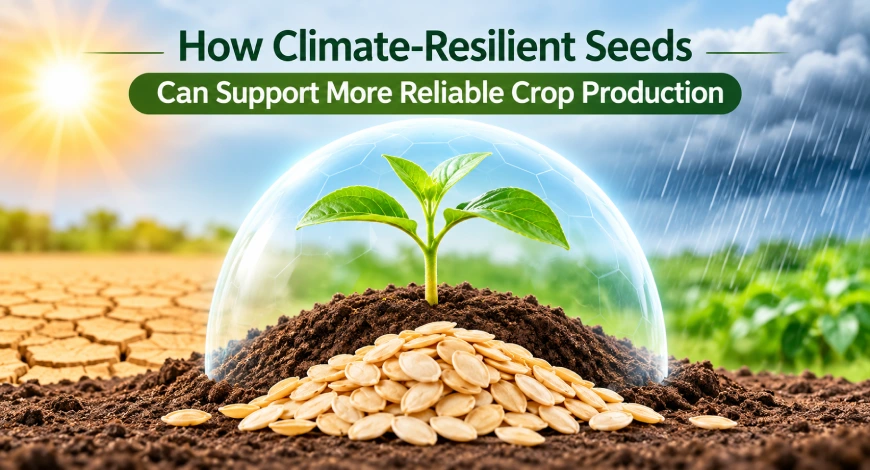
Changing weather patterns are making crop planning more challenging for Indian farmers. Longer dry spells, sudden heavy rainfall, rising temperatures and shifting growing seasons can affect germination, flowering and harvests. Choosing a suitable Climate-Resilient Seed can help crops cope with certain weather-related stresses and support more reliable production when combined with good farm management.
Farmers exploring improved seed options can connect with a Seeds Producer Company in India and compare varieties based on their region, crop requirements and local growing conditions.
What Are Climate-Resilient Seeds?
Climate-resilient seeds come from crop varieties or hybrids developed or selected for their ability to perform under specific environmental stresses. Depending on the crop, these may include tolerance to:
- Drought or moisture stress: Helps crops manage periods of limited water availability.
- Heat stress: Supports crop development under higher temperatures.
- Excess rainfall: Certain varieties may have improved tolerance to waterlogging or submergence.
- Soil-related stress: Some varieties are developed for conditions such as salinity or alkalinity.
- Crop diseases: Genetic resistance or tolerance to certain diseases can reduce specific production risks.
No seed is resistant to every climate challenge. Farmers should check which stress-related traits have been documented for a particular variety rather than relying on general claims.
How Climate-Resilient Seeds Support Crop Production
1. Help manage unpredictable rainfall
Delayed monsoon arrival or long gaps between rainfall events can affect crop establishment and growth. A suitable drought-tolerant variety may help a crop cope with limited moisture during certain growth stages.
However, farmers should also consider sowing time, soil moisture conservation and irrigation access when selecting seeds.
2. Support crops during high temperatures
Heat can affect germination, flowering, pollination and grain or fruit development. Varieties with suitable heat-tolerance traits may perform better under certain high-temperature conditions.
The level of tolerance differs by crop and variety, so local recommendations and trial results are important.
3. Reduce specific weather-related crop risks
Heavy rainfall and waterlogging can damage roots and reduce plant growth. In areas where excess rain is common, farmers should consider varieties with documented tolerance to these conditions.
Field drainage remains essential. Even a variety with improved tolerance cannot be expected to survive prolonged waterlogging in every situation.
4. Improve crop planning and consistency
Selecting a variety with a suitable maturity period can help farmers plan sowing, harvesting, labour and market supply. This is especially useful when weather conditions make the growing season less predictable.
What Should Farmers Check Before Buying Climate-Resilient Seeds?
Seed selection should begin with an assessment of the farm, not just the product label.
Consider these points before purchasing:
- Local climate: Review rainfall patterns, temperature ranges and common weather risks in your area.
- Soil conditions: Check soil type, drainage, fertility and salinity where relevant.
- Crop duration: Match the variety’s maturity period with the available growing season.
- Documented traits: Ask which specific stresses the variety has been tested or recommended for.
- Seed quality: Check the packet label, batch details, germination information and applicable validity details.
- Market needs: Consider grain quality, fruit characteristics, fodder value and buyer preferences.
Farmers should also consult local agricultural experts or extension services before choosing a variety for a new or high-risk growing area.
Climate-Resilient Seeds Need Good Farm Management
Seed choice is one part of climate adaptation. Farmers can strengthen their crop plan through practices that protect soil, water and plant health.
Improve soil and water management
Use organic matter and suitable soil-management practices to support soil structure and moisture retention. Where practical, use mulching, suitable irrigation methods and field drainage to manage changing water conditions.
Follow crop-specific nutrient recommendations
Excess or insufficient fertiliser can affect plant health. Base nutrient application on soil testing, crop requirements and local recommendations. Adjust irrigation and nutrient management as weather conditions change.
Monitor crops regularly
Inspect fields for wilting, leaf damage, pest activity, disease symptoms and uneven growth. Early identification helps farmers respond before problems spread.
Diversify where suitable
Growing more than one suitable crop or variety can help reduce dependence on a single harvest. Crop rotation and diversification should be planned according to local soil, water and market conditions.
The ICAR Crop Science programme includes research on developing high-yielding, stress-tolerant crop varieties and hybrids for different agro-climatic zones. This highlights why region-specific seed selection matters.
Choosing a Reliable Seed Supplier
A dependable supplier should provide clear product information, genuine packaging, batch traceability and guidance on the recommended growing conditions. Farmers should ask for evidence behind claims about drought, heat, or disease tolerance.
When comparing a Seeds Manufacturer Company in India or Hybrid Seeds Suppliers, consider product suitability, availability, technical support and transparent communication. These factors are more useful than relying only on promotional claims about the Best Seeds Company in India.
TRS Seeds India Pvt. Ltd. offers seed options for farmers and agricultural buyers to explore. Review the available crop categories and confirm the characteristics and suitability of individual products before ordering.
Build a More Prepared Crop Plan
Climate-resilient seed selection can help farmers manage certain weather-related risks but it works best alongside sound soil, water, nutrient and crop-protection practices. The right choice depends on the stress your farm faces, the crop you grow and the conditions in your region.
Before the next sowing season, assess your field’s main risks, compare documented seed traits and seek local recommendations. A well-informed decision can support better crop planning and more dependable farm operations over time.
FAQ
- What is a climate-resilient seed?
A climate-resilient seed is a variety or hybrid developed or selected to cope better with specific environmental stresses, such as drought, heat, salinity, or excess water. Its performance depends on the crop, growing region and management practices. No seed can withstand every climate condition.
- How do climate-resilient seeds help Indian farmers?
These seeds may help farmers manage particular weather-related challenges, including moisture shortages, high temperatures and certain water-related stresses. Choosing varieties suited to local conditions can support crop planning. Farmers should combine seed selection with suitable irrigation, soil management and timely crop monitoring.
- Are hybrid seeds more climate-resilient than traditional seeds?
Not automatically. Some hybrids have specific stress-tolerance traits, while certain traditional varieties may be well adapted to local conditions. Farmers should compare documented characteristics, regional trial results, maturity periods and input requirements instead of assuming that one seed category always performs better.
- How can I identify a reliable seed manufacturer company in India?
Check whether the company provides genuine, properly labelled seed packets, batch traceability, clear product information and technical support. Ask for details about the variety’s recommended region and documented stress-related traits. Purchase through authorised dealers and retain the packet and purchase records.
- Which climate-resilient seeds are suitable for Gujarat farmers?
Suitable choices depend on the district, soil type, irrigation access, crop and common weather risks. Farmers should review local agricultural recommendations and compare varieties tested for relevant conditions. An Agriculture Seeds Company in Gujarat or an authorised dealer may help explain available options.