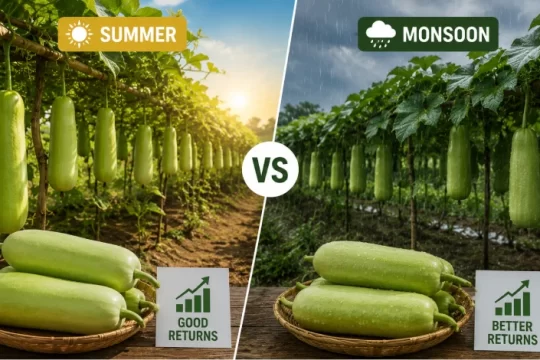
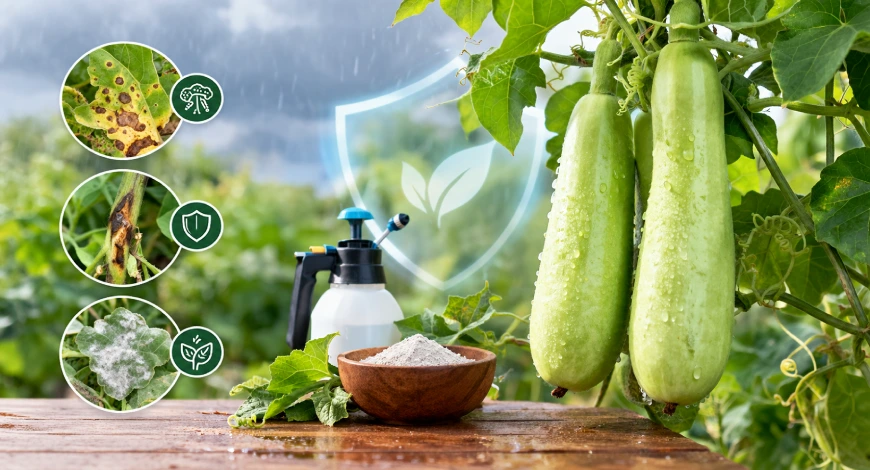
Learning how to Manage Fungal Diseases in Bottle Gourd becomes especially important during humid and rainy weather. High moisture, prolonged leaf wetness and poor field drainage can create favourable conditions for fungal and fungal-like diseases. Once infection spreads across leaves, stems or fruits, crop quality and marketable yield can suffer.
Farmers should therefore combine preventive field practices with regular crop monitoring. Choosing a suitable Hybrid Bottle Gourd Seed is one part of the strategy, but seed selection alone cannot replace good drainage, sanitation and crop management.
Why Humid Weather Increases Disease Risk
Bottle gourd grows as a vigorous vine, creating dense foliage under favourable conditions. During humid weather, moisture may remain on leaves for longer periods, while excessive irrigation or rainfall can keep the root zone wet.
These conditions can favour diseases such as powdery mildew, downy mildew, leaf spots and certain fruit or stem rots, depending on the environment and pathogen present.
The first step is to avoid creating conditions where disease can spread quickly.
6 Practical Ways to Manage Fungal Diseases in Bottle Gourd
1. Improve Drainage
Waterlogging is one of the most common problems during heavy rainfall. Prepare raised beds, ridges or suitable drainage channels so excess water can move away from the root zone.
Avoid unnecessary irrigation when the soil is already sufficiently wet. ICAR‘s agricultural advisories also recommend proper drainage and avoiding water stagnation in vegetable cultivation during rainy conditions.
2. Maintain Good Air Movement
Dense foliage and closely spaced plants can restrict airflow. Better spacing and proper vine training can help leaves dry faster after rainfall or irrigation.
Avoid excessive canopy density where possible. Good ventilation is particularly important when cloudy weather continues for several days.
3. Inspect Plants Regularly
Do not wait until the entire field shows symptoms. Walk through the crop regularly and examine older and younger leaves, stems and fruits.
Look for:
- White or powdery growth
- Yellow or brown leaf spots
- Water-soaked lesions
- Rapid leaf yellowing or drying
- Stem lesions
- Soft or rotting fruits
Early identification allows farmers to respond before the problem becomes widespread.
4. Remove Heavily Affected Plant Material
Where appropriate, remove severely infected leaves, fruits or plant parts and dispose of them away from the production area.
Also keep weeds and crop debris under control. Good field sanitation reduces potential sources of infection and improves airflow around the crop.
5. Avoid Excessive Nitrogen
Too much nitrogen can encourage soft, excessive vegetative growth, which may create a dense canopy. Balanced nutrition is therefore preferable to pushing the crop for rapid leaf growth.
Farmers should base fertilizer decisions on crop requirements and, where available, soil-test information.
6. Use Crop Protection Responsibly
Fungicide or biocontrol use should depend on the disease identified, crop stage, local recommendations and product label. Avoid repeatedly using the same mode of action because this can increase resistance risk.
For specific disease identification and treatment recommendations, farmers should consult qualified agricultural experts or follow recommendations from agricultural universities and government authorities.
Does Seed Selection Help Prevent Disease?
Yes, but with an important qualification. Choosing suitable seed can support a healthier production system, particularly when a hybrid has documented tolerance or resistance to a specific disease.
Farmers searching for the best hybrid bottle gourd should not select a product based only on the words “disease resistant.” Ask which disease the claim refers to and whether supporting product information is available.
Similarly, when buying lauki beej or searching for the best hybrid lauki seed, consider:
- Crop and seasonal suitability
- Germination and quality information
- Plant vigour
- Fruit characteristics
- Relevant disease tolerance or resistance information
- Lot and packaging details
- Supplier support
How to Choose a Reliable Seed Supplier
Farmers working with Vegetable Seeds Suppliers in Gujarat should evaluate more than product price. A dependable supplier should provide clear information about the hybrid and maintain appropriate quality and traceability practices.
An Agriculture Seeds Company in Gujarat can also add value when it provides practical product guidance, consistent availability and responsive support.
For commercial growers and seed dealers, it is useful to maintain records of seed lots, sowing dates, field conditions and disease observations. These records can help compare performance between seasons and support better future purchasing decisions.
A Simple Humid-Weather Checklist
Before and during the rainy or humid period, check:
- Is excess water draining from the field?
- Is the crop canopy too dense?
- Are leaves staying wet for long periods?
- Are disease symptoms appearing in isolated areas?
- Are infected plant parts being removed appropriately?
- Is irrigation being adjusted according to rainfall and soil moisture?
- Is the selected hybrid suitable for the production conditions?
These simple checks can help farmers move from reactive disease control to preventive crop management.
Final Thoughts
Effective management of fungal diseases in bottle gourd requires a complete crop-management approach rather than relying on a single spray. Good drainage, proper airflow, field sanitation, balanced nutrition, regular crop monitoring and timely crop protection can help reduce disease pressure.
Choosing a quality seed is equally important. TRS Seeds India Pvt. Ltd. offers hybrid vegetable seeds with a focus on quality and consistent performance. Farmers should still select hybrids based on their local growing conditions and evaluate disease-related claims carefully. Combining suitable seed with proper field management can help maintain healthier bottle gourd crops and better market quality.
FAQ
- How can farmers manage fungal diseases in bottle gourd during humid weather?
Farmers can reduce fungal disease pressure by improving drainage, avoiding excessive irrigation, maintaining suitable plant spacing, improving airflow, removing severely affected plant material and monitoring the crop regularly. If disease symptoms appear, identify the problem correctly and follow locally recommended crop-protection measures and product-label instructions.
- Are disease resistant hybrid bottle gourd seeds better for humid conditions?
Disease-resistant hybrid bottle gourd seeds can be useful when the resistance or tolerance is relevant to the disease affecting the crop. Farmers should verify which disease the claim covers and consider local conditions, crop season, seed quality, agronomic management and other factors before selecting a hybrid.
- What should I check when buying the best hybrid lauki seed?
When choosing the best hybrid lauki seed, check germination and quality information, crop suitability, fruit characteristics, maturity, plant vigour and any documented disease tolerance or resistance. Also review packaging, lot details and supplier support. A hybrid should be selected for the specific farm environment rather than marketing claims alone.
- Can poor drainage increase fungal disease in bottle gourd?
Yes. Poor drainage can keep the root zone excessively wet and increase moisture around plants, creating conditions that may favour several diseases. During humid or rainy periods, farmers should provide effective drainage, avoid unnecessary irrigation and prevent water stagnation around the crop whenever possible.
- How often should bottle gourd crops be checked for fungal diseases?
During humid or rainy weather, regular scouting is important because disease symptoms can develop and spread quickly under favourable conditions. Farmers should inspect leaves, stems and fruits frequently, particularly after prolonged wet or cloudy periods and investigate unusual spots, mildew, wilting or rotting as soon as they appear.
- Can lauki beej selection prevent fungal diseases completely?
No. Selecting suitable lauki beej with documented disease resistance or tolerance can reduce risk for specific diseases, but it cannot guarantee complete protection. Disease development also depends on weather, field sanitation, moisture, plant density, irrigation, nutrition and pathogen pressure. Integrated crop management remains essential.