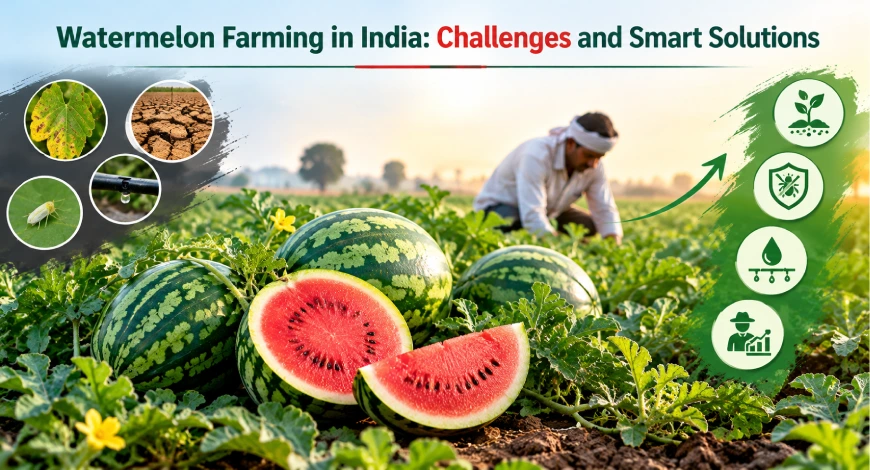
Watermelon Farming in India can be profitable when farmers match the crop with the right season, soil, irrigation facility and market. However, challenges such as water stress, waterlogging, temperature fluctuations, poor seed selection, pest pressure and inconsistent fruit quality can affect the final result.
For commercial cultivation, start by selecting a suitable Hybrid Watermelon Seeds Supplier in India and then build the crop plan around local conditions. A good seed alone cannot compensate for poor irrigation, drainage or field management.
1. Challenge: Choosing the Wrong Hybrid
Not every watermelon hybrid performs the same way in every location. Fruit size, maturity period, flesh quality, rind characteristics, disease tolerance and market requirements can differ considerably.
Smart Solution
Before purchasing Hybrid Watermelon Seeds, compare the hybrid’s recommended growing conditions with your farm. Farmers should consider:
- Local climate and sowing season
- Soil and irrigation availability
- Target fruit size and market
- Maturity period
- Disease and stress tolerance
- Transport requirements
The Best Hybrid Watermelon Seed is therefore not necessarily the same for every farm. It should be the one that fits the intended production and marketing conditions.
2. Challenge: Water Stress and Uneven Irrigation
Watermelon needs careful moisture management. Too little water during important growth stages can affect plant development and fruit formation, while excessive irrigation can create root-zone problems.
Smart Solution
Drip irrigation can help deliver water closer to the root zone and make irrigation easier to manage. Adjust irrigation according to soil type, crop stage, weather and actual moisture conditions rather than following a fixed schedule.
ICAR has documented a farmer innovation combining raised beds, drip irrigation and mulch for watermelon cultivation, particularly where waterlogging is a concern.
3. Challenge: Waterlogging and Poor Drainage
Heavy rainfall or poorly drained fields can damage watermelon roots. This becomes especially important in areas with heavy soils or unexpected rainfall.
Smart Solution
Raised beds can improve drainage by keeping the root zone above areas where excess water collects. Mulching can also help manage soil moisture and weeds when used correctly.
The raised-bed, drip and mulch approach documented by ICAR was specifically developed to reduce crop losses from waterlogging.
4. Challenge: Soil Problems
Watermelon generally needs a well-drained field with suitable soil conditions. Compacted soil, poor drainage or an unsuitable soil reaction can restrict root development.
Smart Solution
Before planting, check the soil and improve its structure where required. Incorporate well-decomposed organic matter according to soil-test recommendations and avoid fields where standing water remains for long periods.
Do not copy fertilizer quantities from another farm without considering soil testing and local recommendations.
5. Challenge: Temperature Fluctuations
Watermelon is sensitive to unsuitable temperatures during different stages of growth. Sudden weather changes can affect flowering, fruit setting and overall plant growth.
Smart Solution
Plan sowing according to your local production window. Use hybrids recommended for the target region and avoid choosing seed only because it performs well in a different agro-climatic zone.
ICAR‘s horticultural research programme specifically focuses on cultivars suited to different agro-climatic zones and stresses the importance of improved cultivars with tolerance to biotic and abiotic stresses.
6. Challenge: Pest and Disease Pressure
Watermelon fields can face problems from insects, fungal diseases and viral diseases. Symptoms may sometimes appear similar, making early identification important.
Smart Solution
Scout the crop regularly instead of waiting for visible damage to spread. Check leaves, growing points, flowers and developing fruits.
Maintain field sanitation and remove severely affected plant material where appropriate. For chemical control, follow current local recommendations and product labels rather than applying a fixed spray schedule.
7. Challenge: Fruit Quality and Market Rejection
A crop may produce good fruit numbers but still face marketing problems if fruit size, appearance, sweetness, firmness or uniformity does not match buyer expectations.
Smart Solution
Decide your target market before sowing. Fresh-market buyers, wholesalers, retailers and long-distance traders may have different requirements.
Seed selection, balanced nutrition, irrigation management and harvesting at the correct maturity stage should all be considered together.
8. Challenge: Selecting a Reliable Seed Supplier
Seed quality is one of the first commercial decisions in watermelon production. Poor traceability or unsuitable planting material can create problems that become visible only after considerable investment.
Smart Solution
When evaluating a Watermelon Seeds Supplier, check:
- Seed packet and lot details
- Germination information
- Recommended growing conditions
- Product traceability
- Supply consistency
- Technical information
- Suitability for your target market
For larger buyers, dealers and contract farming operations, working with a professional seeds producer company in India can make procurement and crop planning more transparent.
Smart Planning for Watermelon Farming
A practical production plan should connect seed selection → soil preparation → irrigation → crop monitoring → harvest → market.
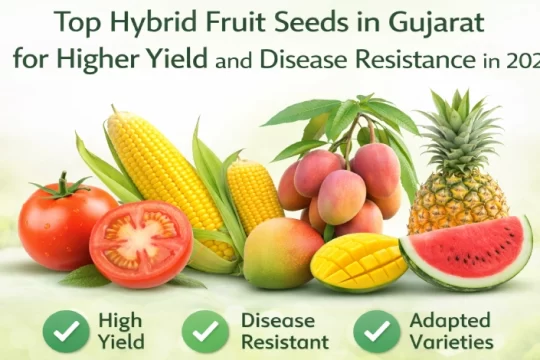
Farmers in Gujarat can also compare locally suitable Hybrid Fruit Seeds in Gujarat based on the growing season, irrigation conditions and buyer requirements rather than relying only on generic online recommendations.
For commercial growers, keeping records of the hybrid used, sowing date, irrigation, pest incidence, harvest quantity and fruit quality can make the next crop decision more evidence-based.
Final Takeaway
The biggest challenges in Watermelon Farming in India cannot usually be addressed with a single technique. Better results depend on selecting a hybrid suited to the local climate and soil, maintaining a healthy root zone, managing irrigation carefully, monitoring pests and diseases and producing fruit that matches the needs of the target market.
For farmers, dealers and institutional buyers, clear seed information and reliable supply are also important. TRS Seeds India Pvt. Ltd., a seeds production company in India, offers hybrid fruit seeds for different farming requirements.
FAQ
1. What are the main challenges in Watermelon Farming in India?
The main challenges include unsuitable hybrid selection, irregular irrigation, waterlogging, poor drainage, temperature fluctuations, pest and disease pressure and fruit quality issues. Farmers can reduce these risks by matching the hybrid to local conditions, preparing the field properly, using efficient irrigation and monitoring the crop throughout its growth cycle.
2. How should farmers choose Hybrid Watermelon Seeds?
Farmers should compare Hybrid Watermelon Seeds based on local climate, sowing season, soil, irrigation availability, maturity period, fruit characteristics, disease or stress tolerance and target market. The most suitable hybrid depends on farm conditions, so growers should consider documented product information rather than choosing seed only by price or yield claims.
3. How can a Watermelon Seeds Supplier support commercial farmers?
A reliable Watermelon Seeds Supplier can provide product information, lot details, germination information, recommended growing conditions and consistent seed availability. These details are particularly useful for commercial farms, dealers and institutional buyers planning multiple planting cycles. Farmers should also verify whether the selected hybrid suits their region and intended market.
4. What is the role of drip irrigation in Watermelon Farming in India?
Drip irrigation can help deliver water directly to the crop’s root zone and make moisture management more controlled. It can be particularly useful where water availability is limited. However, irrigation frequency should still be adjusted according to soil type, crop stage, weather and actual field moisture conditions.
5. Are Hybrid Fruit Seeds in Gujarat suitable for every watermelon farm?
Hybrid Fruit Seeds in Gujarat are not automatically suitable for every farm because growing conditions vary between locations. Farmers should consider local temperature, soil, irrigation, sowing window, disease pressure and market requirements before selecting a hybrid. Product recommendations and local agricultural guidance should be checked before commercial planting.