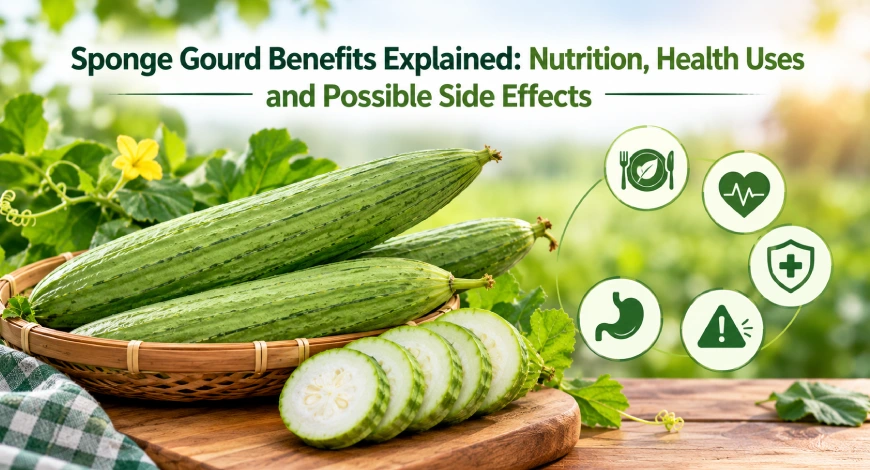
Sponge Gourd Benefits Explained go beyond its familiar place in Indian kitchens. Young sponge gourd is a tender vegetable that contributes dietary fibre and several nutrients, including vitamin C and minerals. It can be included in a balanced diet when prepared as part of varied meals.
For farmers and commercial growers, good produce starts with suitable planting material. Selecting Hybrid Sponge Gourd Seeds according to the growing region, season and market requirements is an important first step.
What Is Sponge Gourd?
Sponge gourd belongs to the Luffa group of cucurbit vegetables. Its young fruits are commonly consumed as a vegetable, while mature fruits develop a fibrous structure that can be used as a natural sponge.
ICAR identifies Luffa cylindrica as sponge gourd and notes its traditional names and uses in India.
Nutritional Benefits of Sponge Gourd
1. Provides Dietary Fibre
Sponge gourd contributes dietary fibre to the diet. Fibre is an important part of healthy eating and supports normal digestive function when consumed alongside adequate fluids and a varied diet.
Research comparing indigenous vegetables has identified crude fibre as a notable nutrient component of sponge gourd.
2. Contains Vitamin C and Minerals
Studies describe sponge gourd as a source of vitamin C and minerals such as potassium, calcium, magnesium and iron. The exact nutritional composition can vary with variety, growing conditions and maturity.
Rather than treating one vegetable as a complete nutrition source, it is better to include sponge gourd alongside other vegetables, pulses, grains and protein-rich foods.
3. Supports a Vegetable-Rich Diet
Adding different vegetables to regular meals increases dietary variety. Sponge gourd can be cooked in curries, dals, stir-fries and other Indian preparations.
Its mild taste also makes it easy to combine with spices and other ingredients without dominating the dish.
Common Uses of Sponge Gourd
Everyday Cooking
Tender sponge gourd is commonly peeled, chopped and cooked with spices, lentils or other vegetables. It can also be used in soups and lightly cooked dishes.
The fruit should generally be consumed while tender. As it matures, the internal fibre becomes tougher and less suitable as a regular vegetable.
Traditional Uses: Keep the Evidence in Perspective
Sponge gourd has a history of traditional medicinal use and scientific studies have investigated its phytochemicals and biological activities. However, laboratory or traditional findings do not automatically establish that eating sponge gourd can treat a disease.
For medical conditions, it should not replace prescribed treatment or professional medical advice.
Possible Side Effects and Precautions
Sponge gourd is generally used as a food but individual responses can vary.
Avoid Very Bitter Fruit
A strongly bitter taste in a cucurbit vegetable should not be ignored. Unusual bitterness can be associated with naturally occurring cucurbitacins in some cucurbits, which can cause gastrointestinal symptoms when consumed in high amounts.
If a sponge gourd tastes unusually or intensely bitter, it is sensible to discard it rather than trying to mask the bitterness with spices.
Consider Individual Allergies or Sensitivities
As with other foods, some people may experience an allergic or digestive reaction. Anyone who develops unusual symptoms after eating a food should stop consuming it and seek appropriate medical advice if symptoms are significant or persistent.
Do Not Confuse Food With Supplements
Research on extracts, isolated compounds or laboratory preparations is different from evidence about eating the whole vegetable. Claims about treating diabetes, cancer, inflammation or other diseases should therefore be viewed cautiously unless supported by appropriate human clinical evidence.
Why Seed Selection Matters for Farmers
The consumer benefits of sponge gourd begin with consistent crop production. For commercial growers, Sponge Gourd Seeds should be selected according to the intended growing season, local conditions and buyer requirements.
When evaluating Hybrid Sponge Gourd Seeds, consider:
- Fruit shape, colour and market preference
- Maturity period
- Adaptation to the target region
- Disease and stress considerations
- Seed quality and traceability
- Expected harvest requirements
- Supplier documentation and support
ICAR‘s horticultural research programme emphasizes improved vegetable varieties with suitable quality and adaptation to different agro-climatic conditions.
Farmers looking to buy hybrid sponge gourd seeds should therefore compare documented product characteristics rather than selecting seed only on price or broad yield claims.
Choosing a Reliable Seed Supplier
For commercial production, work with a supplier that provides clear information about the seed lot, packaging, germination details and recommended growing conditions.
Hybrid Seeds Producers in India and Hybrid Vegetable Seeds Suppliers in Gujarat serve farmers, dealers and institutional buyers with different production requirements. Buyers should evaluate traceability, consistency of supply and product suitability alongside commercial terms.
The idea of the “best high-yield hybrid sponge gourd seeds” is also context-dependent. A hybrid that performs well under one combination of climate, soil and management may perform differently elsewhere.
Final Thoughts
Sponge gourd is a nutritious vegetable that can provide fibre, vitamin C and essential minerals as part of a balanced diet. Its value as an everyday food is well established, while claims about specific disease-treatment benefits should be considered carefully and supported by reliable evidence.
For growers, achieving consistent crop quality starts with selecting suitable seeds and continues with proper nursery management, balanced nutrition, irrigation, pest monitoring and timely harvesting. Choosing the right hybrid for local growing conditions and market requirements is an important step. TRS Seeds India Pvt. Ltd. provides hybrid vegetable seeds designed to support growers looking for suitable and reliable seed options for commercial cultivation.
FAQ
1. What are the main Sponge Gourd Benefits Explained for nutrition?
Sponge gourd can contribute dietary fibre, vitamin C and several minerals to the diet. Its nutritional value makes it a useful addition to a varied vegetable-based meal plan. However, it should be considered one part of a balanced diet rather than a standalone source of essential nutrients or a treatment for disease.
2. Is sponge gourd good for everyday eating?
Tender sponge gourd can be included in regular meals as a cooked vegetable. It provides dietary fibre and micronutrients and can be prepared in curries, dals, soups and stir-fries. Nutritional value varies with variety, maturity and growing conditions, so dietary variety remains important for overall nutrition.
3. Are there any possible side effects of eating sponge gourd?
Most people consume sponge gourd as a normal vegetable, but individual food sensitivities can occur. Avoid eating fruit that tastes unusually bitter. If someone develops persistent digestive symptoms, swelling, breathing difficulty or another concerning reaction after eating it, appropriate medical attention should be sought promptly.
4. How should farmers choose Hybrid Sponge Gourd Seeds?
Farmers should compare Hybrid Sponge Gourd Seeds according to local climate, soil, season, disease pressure, fruit characteristics and target market. Seed packaging, lot identification, germination information and supplier traceability should also be checked. Local agricultural recommendations can help determine whether a particular hybrid suits the production area.
5. Where can farmers buy hybrid sponge gourd seeds?
Farmers looking to buy hybrid sponge gourd seeds should source them from a reliable seed supplier that provides clear product information, proper packaging, lot details and recommended growing conditions. Commercial growers should also consider supply consistency, traceability and regional suitability instead of choosing seed solely by price.
6. How do Hybrid Seeds Producers in India support sponge gourd growers?
Hybrid Seeds Producers in India can provide different planting-material options suited to varied production conditions. Buyers should review product characteristics, seed quality information, packaging, traceability and technical guidance.