The Guide to Vegetable Seeds in India is essential for anyone involved in farming, nursery management or agri-business. Choosing the right seeds directly impacts yield, crop qualityand profitability. Whether you are a farmer or a distributor, understanding seed types and their uses helps you make smarter decisions.
If you’re looking for a reliable Hybrid Vegetable Seeds Supplier in India, it’s important to evaluate quality, consistency and supplier credibility before purchasing.
Understanding Vegetable Seeds in India
India has a diverse agro-climatic range, which allows the cultivation of various vegetable crops across seasons. Seed selection depends on factors like soil type, climate, irrigationand market demand.
From open-pollinated to hybrid varieties, each seed type serves a different purpose. Experienced growers often choose seeds based on yield performance, disease resistanceand shelf life.
Types of Vegetable Seeds
1. Open-Pollinated Seeds (OP Seeds)
These are traditional seeds that farmers can save and reuse.
- Cost-effective for small farmers
- Stable genetics over generations
- Suitable for organic farming
However, yield and uniformity may vary.
2. Hybrid Vegetable Seeds
Hybrid seeds are developed by crossing two parent lines for better performance.
- Higher yield potential
- Improved disease resistance
- Uniform size and quality
This is why many seed companies in India focus heavily on hybrid development.
3. Heirloom Seeds
These are naturally preserved varieties passed down over generations.
- Rich in flavor
- Ideal for niche markets
- Lower commercial yield
Popular Vegetable Seed Varieties in India
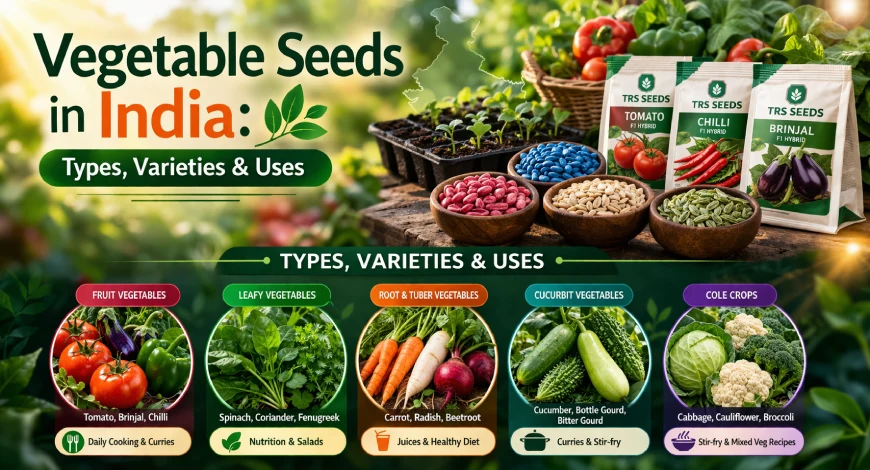
Different crops perform better in different regions. Some widely used vegetable seeds include:
- Tomato (Hybrid & OP varieties)
- Chilli & Capsicum
- Okra (Bhindi)
- Brinjal (Eggplant)
- Cucumber & Gourds
Leading vegetable seeds suppliers in India offer region-specific varieties to maximize productivity.
How to Choose the Right Seeds
Choosing the right seeds is not just about price; it’s about long-term returns.
Key factors to consider:
- Climate suitability: Match seeds with local weather conditions
- Disease resistance: Reduces crop loss and pesticide cost
- Market demand: Grow what sells well in your region
- Yield potential: Higher yield improves profitability
According to the Indian Council of Agricultural Research (ICAR), selecting high-quality certified seeds can improve crop productivity by up to 20–25%.
Role of Hybrid Seeds in Modern Agriculture
Hybrid seeds have transformed vegetable farming in India. They are widely used by commercial growers, institutional buyers and exporters.
Benefits include:
- Consistent crop quality
- Better shelf life for transportation
- Higher resistance to pests and diseases
This makes top hybrid seeds suppliers crucial partners for large-scale farming operations.
Bulk Buying & Supply Considerations
For agri dealers, distributorsand institutional buyers, sourcing from a bulk hybrid veggie seeds supplier ensures:
- Competitive pricing
- Consistent supply
- Quality assurance
Working with an established best hybrid seeds company in India also ensures proper testing, certification and after-sales support.
Final Thoughts
Vegetable seed selection is the foundation of successful farming. With increasing demand for high-quality produce, investing in the right seeds is no longer optional it’s essential.
This Guide to Vegetable Seeds in India helps you understand the options available and make informed decisions based on your needs. Whether you are a grower or a supplier, choosing the right seed partner can significantly impact your results.
FAQ
1. What are the best hybrid vegetable seeds in India?
The best hybrid seeds depend on crop and region. Tomato, chilliand cucumber hybrids are popular due to high yield and disease resistance offered by top hybrid seeds suppliers.
2. How do I choose a reliable vegetable seeds supplier in India?
Look for certified suppliers with proven track records, quality testing processesand strong distribution networks. Trusted vegetable seeds suppliers in India also provide agronomic support.
3. What is the difference between hybrid and open-pollinated seeds?
Hybrid seeds offer higher yield and uniform crops, while open-pollinated seeds can be reused but may have lower productivity and variation in output.
4. Are hybrid vegetable seeds suitable for small farmers?
Yes, hybrid vegetable seeds in India can benefit small farmers by improving yield and income, though initial costs may be slightly higher.
5. Where can I buy bulk hybrid vegetable seeds in India?
Bulk hybrid veggie seeds suppliers and seed companies in India offer large quantities with better pricing for dealers, distributorsand institutional buyers.
6. Why are hybrid seeds widely used in commercial farming?
Hybrid seeds provide better quality, consistency and resistance to diseases, making them ideal for commercial farming and export markets.