To successfully Plant Hybrid Bitter Gourd Seeds, farmers need the right method, timing and seed quality. Bitter gourd (karela) is a high-demand vegetable in India and hybrid varieties offer better yield, uniform fruits and stronger resistance to pests.
Before starting, it’s important to choose high-quality TRS Seeds and explore their range of Hybrid Bitter Gourd Seeds. Starting with trusted seeds ensures better germination and consistent crop performance.
This step-by-step guide is based on real field practices followed by experienced growers across India.
Why Choose Hybrid Bitter Gourd Seeds?
Higher Productivity
Hybrid varieties are developed to produce more fruits per plant compared to traditional seeds.
Better Disease Resistance
They are bred to tolerate common issues like powdery mildew and fruit rot.
Market-Friendly Output
Uniform size and color help farmers get better prices in the market.
This is why many farmers prefer seeds from a reliable seeds company in India with proven field performance
Step-by-Step Guide to Plant Hybrid Bitter Gourd Seeds
1. Land Preparation
Prepare Loose and Fertile Soil
Bitter gourd grows best in well-drained, sandy loam soil.
What to Do:
- Plough the land 2–3 times
- Add organic compost or farmyard manure
- Level the field properly
Healthy soil is the base for strong plant growth.
2. Seed Selection and Treatment
Choose Quality Seeds
Always use the best hybrid bitter gourd seeds from the Best Hybrid Seeds Company in India.
Seed Treatment
Treat seeds before sowing to prevent early-stage diseases.
Simple Method:
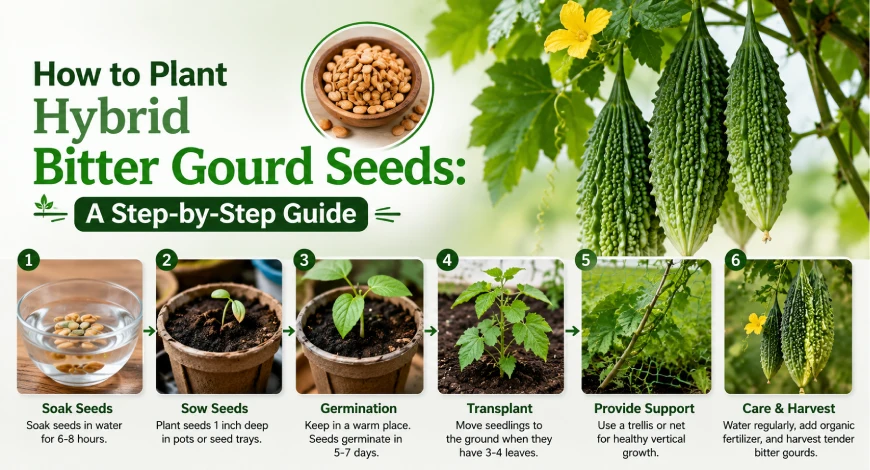
- Soak seeds in water for 6–8 hours
- Use bio-fungicide or the recommended treatment
This improves germination rate and plant health.
3. Sowing the Seeds
Right Time:
In India, sowing is usually done:
- Summer crop: January–March
- Kharif crop: June–July
How to Sow:
- Make small pits at 1.5–2 feet spacing
- Sow 2–3 seeds per pit
- Cover lightly with soil
Proper spacing ensures better airflow and reduces disease risk.
4. Irrigation Management
Maintain Moisture, Avoid Waterlogging
Bitter gourd needs regular watering, especially during early growth.
Best Practice:
- Use drip irrigation if possible
- Water every 3–4 days, depending on the weather
Efficient irrigation supports faster growth and better fruiting.
5. Support and Training (Trellising)
Help Plants Grow Upward
Bitter gourd is a climbing plant and needs support.
Benefits:
- Better sunlight exposure
- Cleaner fruits
- Easier harvesting
Use bamboo sticks or a wire trellis for support.
6. Fertilizer and Nutrient Management
Balanced Nutrition is Key
Use a mix of organic and chemical fertilizers based on soil test.
General Recommendation:
- Nitrogen for growth
- Phosphorus for roots
- Potassium for fruit quality
According to the Indian Council of Agricultural Research, balanced fertilization significantly improves vegetable crop productivity and quality.
7. Pest and Disease Management
Monitor Regularly
Common issues include aphids, fruit flies and fungal diseases.
What Farmers Do:
- Use neem-based sprays
- Remove infected plants
- Follow crop rotation
Early action helps avoid major losses.
8. Harvesting the Crop
Right Time Matters
Harvest bitter gourd when the fruits are tender and green.
Tips:
- Pick every 2–3 days
- Avoid over-mature fruits
Timely harvesting ensures better market prices and continuous yield.
Common Mistakes to Avoid
- Using low-quality seeds
- Overwatering the crop
- Ignoring spacing
- Delaying pest control
Even small mistakes can reduce yield significantly.
Final Thoughts
To get the best results, focus on each step from seed selection to harvesting. When you Plant Hybrid Bitter Gourd Seeds with the right approach, the crop becomes more productive and profitable.
Start with a small area, follow the process carefully and scale once you see consistent results. Farming success comes from steady improvements, not shortcuts.
FAQ
1. What is the best time to plant hybrid bitter gourd seeds in India?
The best time depends on the season. For summer crops, sow between January and March. For Kharif, June to July is ideal. Choosing the right time helps improve germination and overall crop performance.
2. Which are the best hybrid bitter gourd seeds for high yield?
The best hybrid bitter gourd seeds are those that offer strong germination, disease resistance and uniform fruit size. Farmers should choose seeds from a reliable seeds company in India with proven field results.
3. How much spacing is required when planting bitter gourd seeds?
Maintain spacing of 1.5 to 2 feet between plants. Proper spacing ensures good airflow, reduces disease risk and allows plants to grow freely for better fruit production.
4. How often should I water bitter gourd plants?
Watering depends on soil and climate but generally every 3–4 days is sufficient. Avoid overwatering, as it can cause root rot and reduce plant health.
5. Do hybrid bitter gourd seeds need fertilizer?
Yes, hybrid crops require balanced nutrition. Use a mix of organic manure and fertilizers based on soil test results to support healthy growth and higher yield.
6. Which Hybrid Seeds Company in India is reliable for bitter gourd seeds?
A reliable Hybrid Seeds Company in India provides certified seeds, consistent quality and farmer support. Look for companies with strong research and positive farmer feedback.