
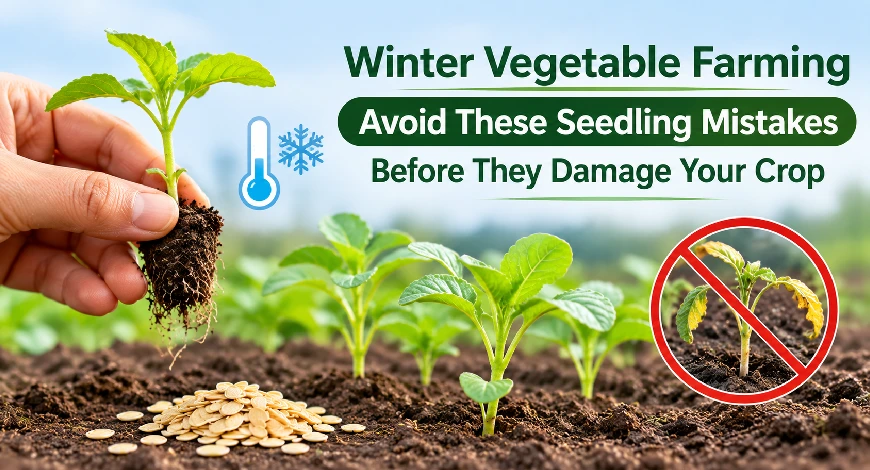
Successful Winter Vegetable Farming starts well before seedlings reach the main field. A weak nursery can lead to uneven plant growth, poor establishment and avoidable crop losses. Whether you grow tomato, cauliflower, cabbage, chilli or other seasonal vegetables, small mistakes during seed sowing and early seedling care can affect the entire crop cycle.
Farmers planning tomato cultivation can also review suitable options from Hybrid Vegetable Seeds Suppliers in Gujarat and match the hybrid’s recommendations with local growing conditions.
Why Seedling Quality Matters in Winter Vegetable Farming
Young plants are sensitive to changes in temperature, moisture, light and growing conditions. Cold nights, excess watering, poor ventilation and overcrowded nursery beds can slow growth or encourage disease.
Healthy seedlings should generally have:
- Strong stems and well-developed roots
- Uniform growth and healthy leaf colour
- No visible pest damage or disease symptoms
- Enough space to develop without competition
The objective is not simply to produce more seedlings, but to raise strong, healthy plants that can establish properly after transplanting.
6 Seedling Mistakes Farmers Should Avoid
1. Sowing seeds too close together
Overcrowded nursery beds restrict airflow and make seedlings compete for light, water and nutrients. Plants may become thin, weak and difficult to transplant.
Better practice: Follow the crop-specific spacing and sowing depth recommended for the variety. Use pro-trays where practical to maintain uniform spacing and reduce root disturbance.
2. Using poorly prepared nursery soil
Heavy, compacted or contaminated soil can affect germination and root development. Reusing nursery soil without proper preparation may also carry disease-causing organisms.
Better practice: Choose a clean nursery location with good drainage. Use a suitable, well-prepared growing medium and clean trays or tools before sowing.
3. Overwatering the seedlings
Too much water can reduce oxygen around the roots and encourage damping-off and other seedling problems. At the same time, allowing the growing medium to dry out completely can affect germination.
Better practice: Maintain even moisture rather than keeping the nursery continuously wet. Water gently according to the growing medium, weather and crop stage.
4. Ignoring winter temperature changes
Low night temperatures can slow germination and seedling growth. Sudden exposure to cold winds may also stress young plants.
Better practice: Use suitable nursery protection, such as low tunnels or protective covers, where local conditions require them. Maintain ventilation during warmer daytime periods to prevent excess humidity and heat.
5. Transplanting seedlings too early or too late
Very young seedlings may struggle to establish in the field. Overgrown seedlings can become root-bound, weak or stressed during transplanting.
Better practice: Follow crop-specific transplanting guidance. Select seedlings with healthy roots and sturdy stems, and transplant during suitable weather. Water them carefully after planting.
6. Skipping hardening before transplanting
Seedlings raised under protected conditions may struggle when moved directly into open-field conditions. Sudden changes in sunlight, wind and temperature can cause transplant shock.
Better practice: Gradually expose seedlings to outdoor conditions before transplanting. Adjust exposure and watering carefully rather than moving them abruptly from a protected nursery to the field.
A Practical Nursery Checklist Before Transplanting
Before moving seedlings to the main field, check:
- Are seedlings healthy, uniform and free from visible disease?
- Are roots developed but not tightly crowded?
- Is the field prepared and free from standing water?
- Is the weather suitable for transplanting?
- Is irrigation available immediately after planting?
- Are crop spacing and planting instructions ready?
ICAR’s article on quality transplants and healthy vegetable nurseries explains why proper nursery practices matter for successful vegetable establishment. Farmers should also follow locally recommended crop-specific practices.
Choosing Reliable Seeds for Winter Crops
Good nursery management begins with suitable seed. When comparing Seed Companies in India, farmers should check the crop variety, growing-season recommendations, seed-lot details, packaging information and cultivation guidance.
A dependable Vegetable Seeds Manufacturer in India should provide clear product information that helps buyers make informed choices. Farmers, dealers and cooperatives should also verify seed labels and retain purchase records.
TRS Seeds India Pvt. Ltd. offers hybrid seed options for agricultural buyers. Before selecting a product, compare its stated characteristics with your region, planting schedule and market requirements. No hybrid can replace good nursery management and suitable field care.
Final Thoughts
A successful winter crop begins with healthy seedlings. Avoiding overcrowding, poor nursery preparation, excess watering, temperature stress and careless transplanting can help farmers establish a more uniform crop.
Plan the nursery according to the crop and local weather, use verified seeds and inspect seedlings before transplanting. These simple checks can prevent common early-stage problems and support better-managed winter vegetable production.
FAQ
1. What are the common mistakes in winter vegetable farming?
Common mistakes include overcrowding nursery beds, using poorly prepared soil, overwatering, ignoring temperature changes and transplanting seedlings at the wrong stage. Skipping hardening can also cause transplant shock. Regular nursery inspection helps farmers identify problems before seedlings move to the main field.
2. How can farmers grow healthy seedlings during winter?
Use clean nursery trays or well-prepared raised beds, a suitable growing medium and crop-specific sowing depth. Maintain consistent moisture without waterlogging, provide adequate light and protect seedlings from harsh cold. Inspect plants regularly for weak growth, pests and disease symptoms.
3. When should vegetable seedlings be transplanted in winter?
The correct transplanting stage varies by crop, variety and growing conditions. Seedlings should have healthy roots and sturdy stems, without becoming overgrown or root-bound. Follow the seed supplier’s recommendations and local agricultural guidance rather than using one fixed age for every vegetable.
4. How do I choose seeds from a Vegetable Seeds Manufacturer in India?
Check the crop and hybrid name, recommended season, regional suitability, seed-lot details, packaging date and cultivation instructions. Ask for clear product information and retain the purchase record. These checks help farmers and dealers compare suppliers and make informed seed-buying decisions.
5. What should farmers check when comparing Seed Companies in India?
Farmers should review product labelling, seed quality information, crop-specific recommendations, availability and customer support. They should also check whether the supplier provides clear guidance on sowing and cultivation. Avoid selecting seeds based only on promotional claims or an attractive price.
6. Is hardening necessary before transplanting winter vegetable seedlings?
Hardening is useful, especially for seedlings raised under protected nursery conditions. Gradually expose plants to outdoor sunlight, wind and temperature changes before transplanting. This helps them adjust to field conditions and may reduce transplant stress when the process is done carefully.