
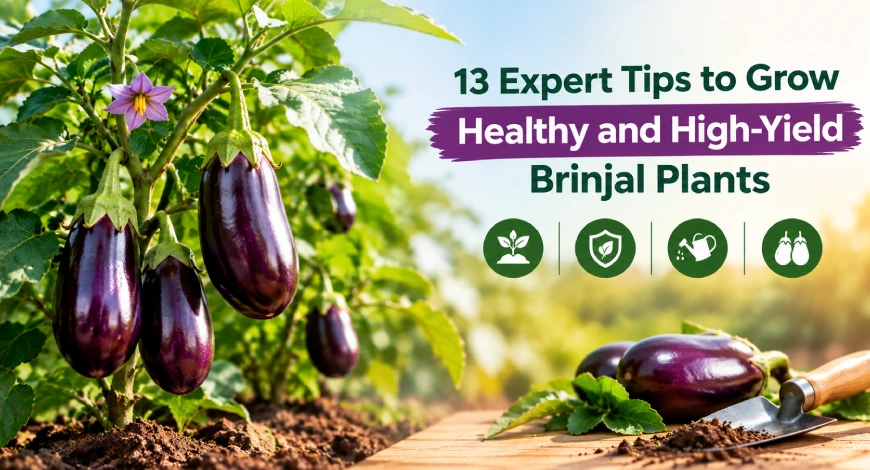
Knowing the right Tips to Grow Healthy Brinjal Plants can make a major difference in plant establishment, fruit quality and harvesting consistency. Start with suitable Hybrid Brinjal Seeds and then manage nursery health, spacing, nutrition, irrigation and pests carefully. The right combination is more important than relying on seed choice alone.
13 Practical Tips for Better Brinjal Growth
1. Select the Right Hybrid
Choose a hybrid according to your local climate, soil, cropping season, disease pressure and market preference. When comparing brinjal seeds hybrid options, check varietal characteristics, maturity period, fruit type, tolerance claims and recommended growing conditions.
2. Buy Seed from a Reliable Source
Seed quality affects crop establishment from the beginning. Farmers and dealers should check the seed packet, lot information, germination details, packing date and recommended usage before purchase.
A reliable hybrid brinjal seed supplier should also provide clear product information and traceability.
3. Raise a Healthy Nursery
Use clean nursery media and avoid overcrowding seedlings. Give seedlings adequate light, moisture and ventilation while avoiding excessive watering.
ICAR advisories also highlight nursery management as an important part of brinjal production, including suitable seed treatment and careful water management.
4. Prepare the Field Properly
Brinjal performs better when the field has good soil structure and drainage. Incorporate well-decomposed organic matter according to soil condition and avoid fields where standing water remains after irrigation or rainfall.
5. Maintain Suitable Plant Spacing
Spacing should match the selected hybrid, growing system and local recommendation. Proper spacing allows better air movement, sunlight penetration and field operations.
ICAR recommendations vary by production region and system, so farmers should follow locally applicable package-of-practice guidance rather than applying one spacing universally.
6. Water Consistently
Avoid both prolonged dryness and excessive irrigation. Irregular moisture can affect plant growth and fruit development, while waterlogged conditions can increase root-related problems.
Drip irrigation can help deliver water more efficiently and keep moisture closer to the root zone when properly managed.
7. Feed Plants According to Crop Need
Brinjal needs balanced nutrition throughout its growth cycle. Nitrogen supports vegetative growth, while phosphorus and potassium contribute to root development, flowering and fruit production.
Do not apply fertilizer simply because the crop appears weak. Soil testing, crop stage and local recommendations should guide nutrient decisions.
8. Keep the Root Zone Weed-Free
Weeds compete with brinjal plants for water, nutrients and light. Early weed management is particularly important while plants are establishing.
Mulching can also help suppress weeds and conserve soil moisture. Recent ICAR field demonstrations have included poly-mulching and integrated nutrient management in brinjal cultivation.
9. Scout Regularly for Pests
Do not wait until pest damage becomes severe. Inspect new leaves, shoots, flowers and developing fruits regularly.
Common concerns can include shoot and fruit borer, whiteflies and other sucking pests. Early identification allows farmers to select an appropriate management approach.
10. Follow Integrated Pest Management
Integrated Pest Management, or IPM, combines preventive, cultural, physical, biological and chemical measures according to actual field conditions.
ICAR‘s current guidance emphasizes monitoring and prevention first, with pesticides used only when necessary and according to recommended doses.
11. Remove Severely Affected Plant Parts
If plants show serious pest or disease symptoms, remove affected material where appropriate and dispose of it safely. Keeping the field clean can reduce sources of continuing infestation.
Crop sanitation should work alongside monitoring rather than being treated as a replacement for a complete pest-management programme.
12. Protect Fruit Quality During Harvest
Harvest fruits at the maturity stage required by your target market. Handle fruits carefully to reduce bruising, cuts and unnecessary mechanical damage.
For commercial farmers, harvesting schedules should also consider buyer requirements, transportation time, fruit size and expected market demand.
13. Review Crop Performance After Every Season
Keep simple records of seed lot, sowing date, transplanting date, irrigation, fertilizer applications, pest incidence, harvest quantity and market response.
This information helps farmers compare hybrids based on their own field experience. It also helps progressive growers and commercial buyers make more informed decisions when selecting the best hybrid brinjal seeds for future crops.
How to Choose a Brinjal Seed Supplier in India
Farmers, dealers and institutional buyers should look beyond price when selecting a supplier. A dependable Hybrid Seeds Company in India should provide clear product information, proper packaging and traceability.
When evaluating Vegetable Seeds Suppliers, consider:
- Seed quality and germination information
- Hybrid suitability for the target region
- Packaging and lot identification
- Technical product information
- Supply consistency
- Dealer and farmer support
- Transparent documentation
A professional Seeds Manufacturer Company in India should make it easier for buyers to understand what they are purchasing and how the product is intended to be used.
Final Takeaway
Successful brinjal production depends on several connected factors, including suitable hybrid selection, healthy seedlings, proper field preparation, balanced nutrition, efficient irrigation, regular crop monitoring and timely harvesting.
No single practice guarantees higher yield. Farmers should select seeds suited to their local growing conditions and combine them with effective crop management throughout the season. TRS Seeds India Pvt. Ltd. provides hybrid vegetable seeds for farmers and growers looking for dependable seed options and consistent crop planning from nursery to harvest.
FAQ
- What are the best tips to grow healthy brinjal plants?
The key tips include selecting suitable hybrid seed, raising healthy nursery seedlings, preparing well-drained soil, maintaining proper spacing, managing irrigation, applying balanced nutrition, controlling weeds, scouting for pests and harvesting at the correct maturity stage. Local climate, soil and crop-management practices should also guide decisions.
- How should I choose a brinjal seeds hybrid for commercial farming?
Choose a brinjal seed hybrid according to your region, season, soil, disease pressure, fruit characteristics and target market. Check germination information, lot details, packaging and recommended growing conditions. Comparing documented varietal characteristics with local farm experience can help identify suitable options for commercial production.
- How can I find a reliable hybrid brinjal seed supplier?
A reliable hybrid brinjal seed supplier should provide properly labelled and packaged seed, clear product information, lot identification and relevant technical guidance. Farmers should also consider supplier consistency, traceability, local suitability and after-sales support instead of choosing seed based only on purchase price.
- What should farmers look for in a Hybrid Seeds Company in India?
Farmers should assess seed quality, product information, packaging, traceability, hybrid suitability and supply reliability. A credible Hybrid Seeds Company in India should communicate product characteristics clearly and avoid unsupported yield promises. Local recommendations and field performance should remain important parts of the selection process.
- How do Vegetable Seeds Suppliers support commercial brinjal growers?
Professional Vegetable Seeds Suppliers can support growers by providing suitable hybrid options, product information, packaging details and supply continuity. For larger farms, dealers and institutional buyers, consistent availability and traceability can be particularly useful when planning nursery production and commercial cultivation across multiple planting cycles.
- Can hybrid brinjal seeds increase yield?
Hybrid brinjal seeds can offer useful characteristics such as uniformity, vigour and desirable fruit traits, depending on the specific hybrid. However, yield is influenced by climate, soil, irrigation, nutrition, pests, diseases and crop management. Therefore, farmers should evaluate hybrid performance under their own growing conditions.