Preparing for the upcoming sowing season begins long before seeds reach farmers. One of the most important responsibilities for wholesalers, distributors, agri-retailers and institutional buyers is performing proper Hybrid Seed Quality Checks for Distributors. A reliable inventory helps reduce complaints, improve customer satisfaction and strengthen long-term business relationships.
Before placing bulk orders, partnering with a trusted Hybrid Seeds Manufacturer in India is essential. However, even when purchasing from established suppliers, distributors should verify seed quality, documentation, packaging and storage standards before the 2026 sowing season begins.
This guide explains five practical quality checks that every wholesale distributor should complete before supplying hybrid seeds to farmers and dealers.
Why Seed Quality Matters for Wholesale Distributors
Distributors serve as the bridge between seed manufacturers and farmers. Poor-quality seeds can result in:
- Low germination
- Uneven crop establishment
- Customer complaints
- Product returns
- Loss of dealer confidence
- Damage to business reputation
A systematic quality inspection minimizes these risks while building trust throughout the supply chain.
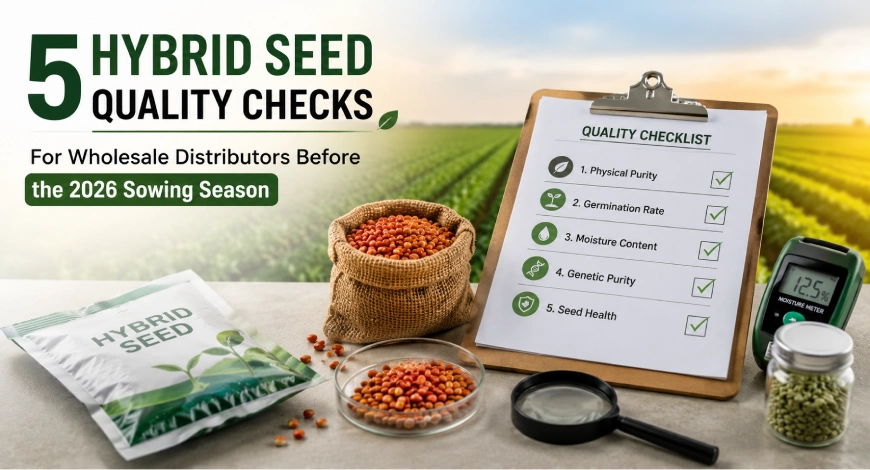
1. Verify Germination and Seed Testing Reports
The first quality check should always be germination performance.
What to Review
Ask your supplier for:
- Germination test reports
- Seed purity reports
- Laboratory testing certificates
- Batch-wise quality documentation
Seeds with consistent germination help farmers establish healthy crops and reduce seed wastage.
Why It Matters
High germination rates improve:
- Customer satisfaction
- Dealer confidence
- Repeat purchases
- Brand credibility
Professional Hybrid Seeds Producers in India routinely perform laboratory testing before product release.
2. Inspect Packaging, Labels and Traceability
Packaging is more than product presentation; it protects seed quality throughout transportation and storage.
Check Every Seed Lot For
- Proper sealing
- Batch number
- Manufacturing date
- Lot identification
- Germination percentage
- Net weight
- Storage instructions
Clear labeling allows distributors to trace products quickly if quality concerns arise.
Avoid Damaged Packaging
Reject seed bags showing:
- Torn seals
- Moisture damage
- Broken stitching
- Missing labels
Packaging defects may compromise seed viability during storage.
3. Confirm Genetic Purity and Variety Authenticity
Farmers purchase hybrid seeds expecting uniform crop performance.
Why Genetic Purity Is Important
Authentic hybrids provide:
- Uniform growth
- Consistent fruit or grain quality
- Reliable maturity period
- Better market acceptance
Mixed or impure seed lots can reduce farmer confidence and negatively affect future sales.
Always purchase from an experienced Agriculture Seeds Company in India that follows documented breeding and quality assurance protocols.
4. Review Storage and Transportation Conditions
Even premium-quality seeds can lose viability if stored improperly.
Warehouse Inspection Checklist
Ensure that seeds are stored:
- In cool, dry environments
- Away from direct sunlight
- On pallets instead of floors
- With proper ventilation
- Protected from pests and rodents
Transportation Best Practices
During transportation:
- Prevent water exposure
- Avoid excessive heat
- Handle cartons carefully
- Minimize unnecessary loading and unloading
Maintaining the cold and dry chain helps preserve seed quality until delivery.
5. Evaluate Supplier Reliability and Technical Support
Seed quality depends not only on the product but also on the manufacturer behind it.
Ask These Questions Before Buying
- Is the company experienced in hybrid seed production?
- Do they maintain batch traceability?
- Can they provide technical documentation?
- Do they offer agronomic guidance?
- Are products consistently available during peak demand?
The best seed suppliers build long-term partnerships rather than simply selling products.
Additional Quality Checks Worth Considering
Although the five checks above are essential, distributors can further strengthen inventory management by reviewing:
Seed Moisture Levels
Excess moisture reduces storage life and may affect germination.
Inventory Rotation
Follow the First-In, First-Out (FIFO) method to minimize aging stock.
Demand Forecasting
Analyze previous sales data to avoid overstocking or shortages during the sowing season.
Building Farmer Confidence Through Quality Assurance
Farmers increasingly evaluate suppliers based on field performance rather than marketing claims.
Distributors who consistently supply quality hybrid seeds benefit from:
- Higher customer retention
- Strong dealer relationships
- Fewer complaints
- Better market reputation
- Sustainable business growth
Quality assurance becomes a competitive advantage in today’s agricultural market.
Industry Standards for Seed Quality
The Indian Council of Agricultural Research (ICAR) emphasizes that quality seeds are among the most important inputs influencing crop productivity and farm profitability. Proper seed testing, storage and certification help maintain high standards throughout the agricultural supply chain.
Following recognized quality management practices helps distributors supply dependable products to farmers across India.
Preparing for the 2026 Sowing Season
Demand for Hybrid Seeds in India continues to grow as farmers adopt improved varieties that offer better yield potential and crop performance.
Distributors should begin procurement planning well before the sowing season by:
- Reviewing historical demand
- Confirming inventory requirements
- Verifying supplier quality systems
- Inspecting storage facilities
- Scheduling timely deliveries
Early planning reduces supply disruptions during peak demand periods.
Final Thoughts
Performing thorough Hybrid Seed Quality Checks for Distributors before the 2026 sowing season helps protect both business reputation and customer satisfaction. From germination reports and packaging inspections to storage conditions and supplier evaluation, each step contributes to delivering reliable products to farmers.
Working with an experienced Hybrid Seeds Manufacturer in India, maintaining strict quality control procedures and following recognized industry standards enable distributors to build long-term trust while supporting successful agricultural production across India.
FAQ
1. Why are hybrid seed quality checks important for wholesale distributors?
Quality checks help distributors supply reliable seeds with high germination, genetic purity and proper packaging. This reduces customer complaints, protects business reputation and improves farmer confidence before the sowing season.
2. What documents should distributors request before purchasing hybrid seeds?
Distributors should ask for germination reports, seed purity certificates, batch details, quality testing records, manufacturing information and labeling documents to verify the authenticity and quality of every seed lot.
3. How should hybrid seeds be stored before distribution?
Hybrid seeds should be stored in a cool, dry and well-ventilated warehouse, protected from moisture, pests, direct sunlight and excessive heat. Proper storage helps maintain germination and seed vigor.
4. How can distributors identify a reliable hybrid seeds manufacturer in India?
Look for manufacturers with quality assurance systems, transparent testing procedures, certified production practices, technical support, consistent supply capacity and a strong reputation in the agricultural seed industry.
5. Why is genetic purity important in hybrid seeds?
Genetic purity ensures uniform crop growth, consistent maturity, better yield potential and predictable product quality. It helps farmers achieve reliable field performance and improves overall customer satisfaction.
6. What is the biggest mistake distributors make before the sowing season?
One common mistake is purchasing seeds based only on price without reviewing quality reports, storage conditions, or supplier credibility. This can lead to poor field performance and increased customer complaints.
7. When should distributors begin preparing seed inventory for the 2026 sowing season?
Distributors should start planning several months before sowing begins. Early procurement allows enough time for quality verification, inventory management, storage preparation and timely delivery to retailers and farmers.